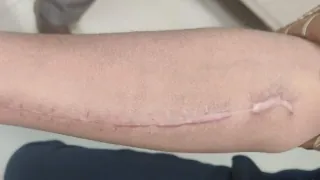
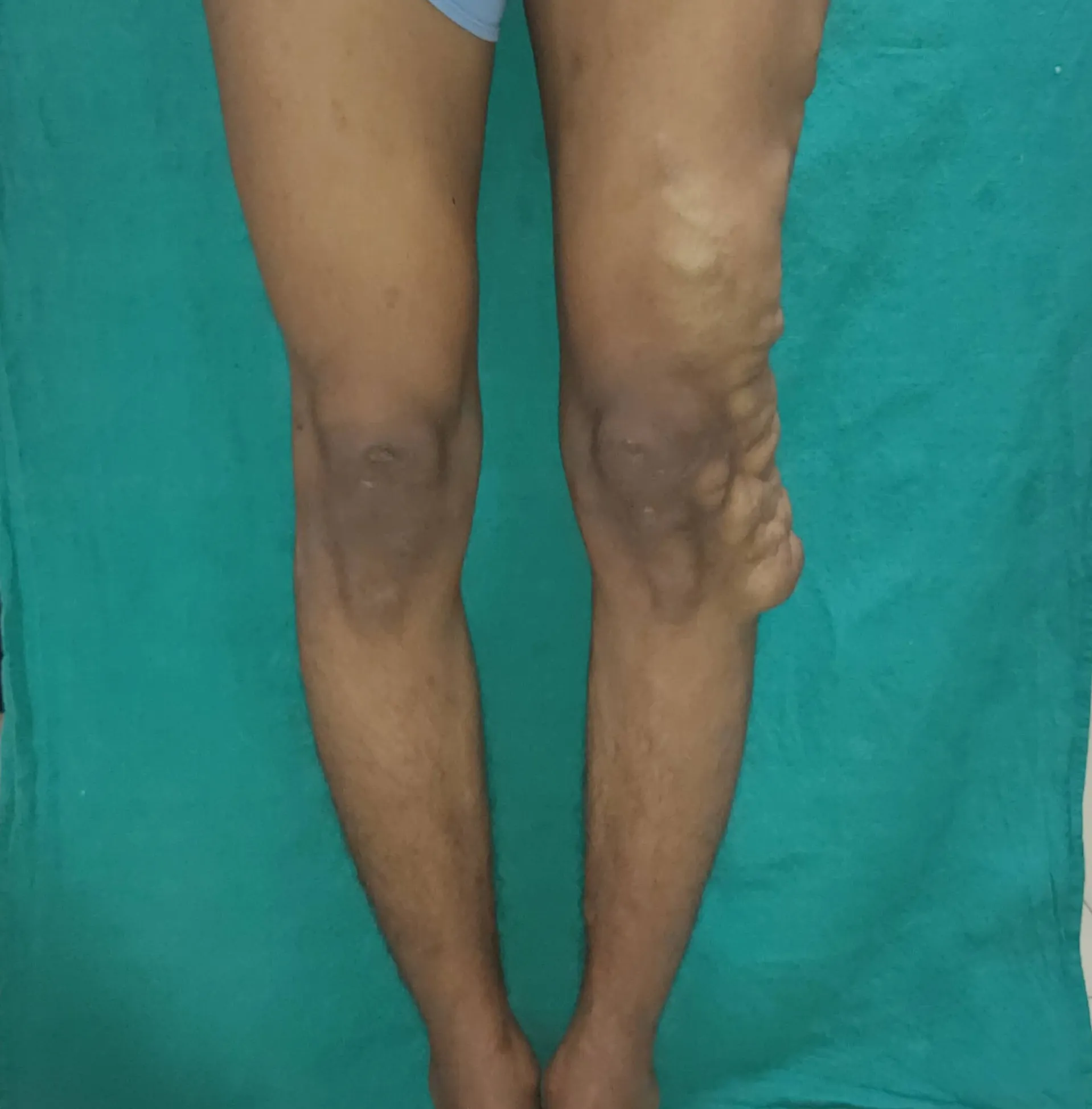
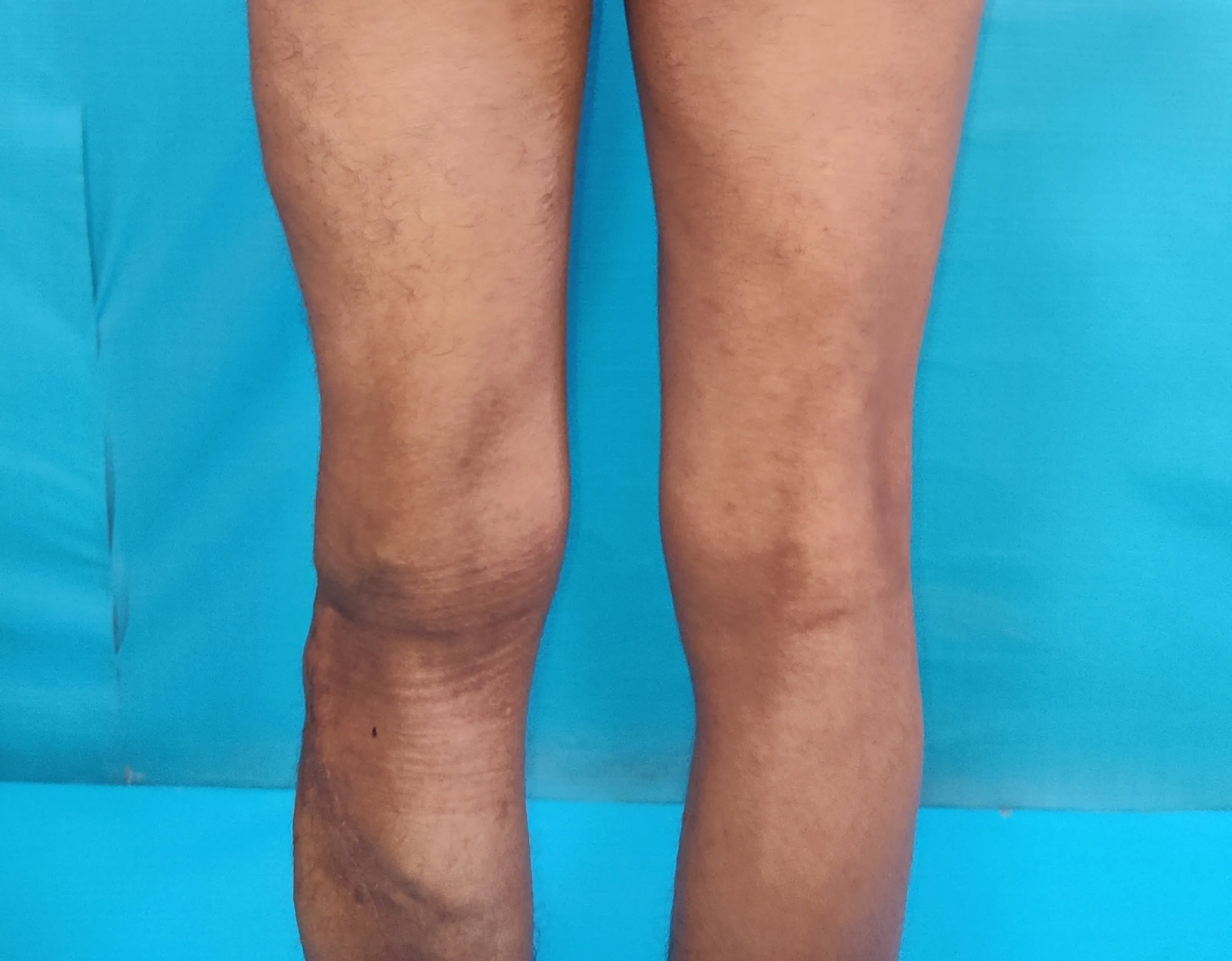
Vascular malformations involve the abnormal development of blood vessels in various parts of the body. These malformations can be categorized based on the volume of blood they allow to pass through.
About Kayakriti and Your Surgeon
A short walk-through of our Lucknow clinic, plus a brief introduction from Dr. Amit Agarwal.
Vascular malformations involve the abnormal development of blood vessels in various parts of the body. These malformations can be categorized based on the volume of blood they allow to pass through.
There are two types:
a) Low-flow vascular malformations are lymphatic or venous.
b) High-flow vascular malformations are arterial or arterio-venous.
Low Flow Vascular Malformations
Low-flow VMs are formed by either venous or lymphatic or both of the blood vessels. These are called Low flow vascular malformations considering the speed of flow of fluid in them. They are the abnormal bunch of vessels conducting blood or lymph fluid within them and forming a mass-like appearance.
They can develop small stones like nodules within them because of the slow speed of the fluid passing through them.
Locations of Low Flow Vascular Malformations
These can occur in any part of the body and are usually painless.
They are quite very commonly seen by plastic surgeons on the face, hands, and feet.
Symptoms of Low Flow Vascular Malformations
Physically they appear as –
Very soft swellings which, on touching, feel like bags of worms, as commonly mentioned.
They usually decrease in size after lying down and increase on prolonged standing.
They appear bluish-pink in color and do not cause any pain.
On deeper palpation, small nodules can be felt in them.
Complications of Low Flow Vascular Malformations
They may cause complications such as:
Body part disfigurement
Recurrent ulceration or bleeding
Oozing of fluid from the multiple vesicles present over the skin overlying the swelling (in a few cases).
Compression of underlying structures leads to related symptoms like pain, distal limb ischemia, swelling, etc.
In young children, if the malformation is large, it may lead to disproportionate body growth.
Avoiding Complications
To avoid the above complications, early treatment is recommended as soon as diagnosis is made.
In smaller children, treatment may be delayed until they reach the age of 2 years, as these malformations can regress spontaneously.
In adults, a “wait and see” approach is generally not advisable.
Consequences of No Treatment
If left untreated, the swelling can become so large that it can involve major blood vessels or vital organs completely. In such cases, surgery is avoided and not done because it may lead to dysfunction of the involved organ which may cause more severe complications.
Diagnosing Low Flow Vascular Malformations
Diagnosis involves a clinical examination to assess features such as soft consistency, bluish color, and increased size with a change in body position. Additionally, an MRI scan is routinely performed to determine the anatomical extent of the lesion in all dimensions.
Treatment at Kayakriti
Various modalities of treatment for them include:
A. Medical treatment by beta blockers . It helps only in small children if the malformation is made of small capillaries.
B. Ultrasound-guided injection of sclerosant or bleomycin into the swelling for the treatment of small, single lymphatic and venous malformation
C. Wide local excision surgery is the treatment of choice in low-flow VMs with preservation of surrounding vital structures.
Surgical Procedure for Low-Flow Vascular Malformations
The surgical procedure for low-flow VM can be highly challenging and technically demanding if it is big and widespread. Surgery is the treatment of choice for low-flow vascular malformations inaccessible locations like the face and is usually done by plastic surgeons.
The procedure requires a lot of preparation from both the patient and the doctor.
During the surgery, feeder vessels are identified, ligated and mass is debulked or excised.
Complications/ Requirements for Surgery
1. Possible complications – should be discussed at length with Dr Amit Agarwal as the low-flow vascular malformations can be quite deep and involve a lot of nearby important structures.
2. Requirement of more than one stage in excision- Sometimes in few cases-
a) if the extent of the malformation is too extensive and deep and
b) if the excision requires the sacrifice of major vessels or nerves or
c) If it endangers the survival of the part,
Then complete excision is not done and part of the malformation which is near the vital structures is left behind so that the function of the part is less disturbed.
The remaining part can be exercised in a separate stage after a few months.
3. The method of coverage of the created defect after the excision of malformation should be agreed upon by the patient and his or her attendants.
Post-Surgery Skin Coverage
After removal of the malformation, a defect may be created which may require simple skin suturing or post-surgical reconstruction with flap/skin graft cover.
Skin grafting may be done if the defect is not very deep and vitals structures are embedded deep and not exposed.
Flap Reconstruction which is usually done when any critical part is exposed like bones, tendons, and joints and it becomes really important to preserve them for normal functioning. This can be done with the local flap or microsurgical-free flaps . A well-blood-supplied tissue is taken from the adjacent area or from other areas of the body to cover the part of the limb with it.
Recurrence Post Surgery
The recurrence rate is high in LARGE and GIANT low-flow malformations as complete excision is not possible in such cases and debulking is done to lessen the symptoms of the malformation on the body.
See the difference
Before & After — Low-Flow Vascular Malformations
Drag the handle to compare. All photos are real patients shared with consent.
Before
After
Before
After
Before
After
Before
After
Before
After
Images shown are intended to provide general treatment insight only.
Every patient is unique, and outcomes may vary depending on individual
condition and treatment plan.
Common questions
Frequently asked questions
What are Low-Flow Vascular Malformations, and how do they differ from other vascular anomalies or abnormalities?
Low-Flow Vascular Malformations are characterized by abnormal blood vessel development with slow blood flow. They differ from high-flow malformations due to the reduced blood flow rate and absence of arterial-venous connections.
What are the common causes and factors contributing to the development of Low-Flow Vascular Malformations in individuals?
The exact cause of Low-Flow Vascular Malformations is often unknown. They can be present at birth and may result from genetic factors or spontaneous developmental abnormalities.
What are the typical signs and symptoms associated with Low-Flow Vascular Malformations, and how do they affect an individual's health and well-being?
Symptoms of Low-Flow Vascular Malformations can vary widely, but they often include pain, swelling, and cosmetic concerns. The impact on an individual’s health depends on the size, location, and complications associated with the malformation.
How are Low-Flow Vascular Malformations diagnosed, and what diagnostic methods are typically used to assess their extent and impact?
Diagnosis involves a clinical evaluation, along with imaging studies like ultrasound, MRI, or angiography. These methods help determine the location, size, and impact of the vascular malformation.
What are the available treatment options for individuals with Low-Flow Vascular Malformations, and when is treatment recommended?
Treatment options may include observation, medication, sclerotherapy, or surgical intervention, depending on the malformation’s size, symptoms, and location. Treatment is recommended if the malformation causes significant symptoms or complications.
What advantages does Kayakriti Clinic offer for the treatment and management of Low-Flow Vascular Malformations, and how do they ensure comprehensive care for affected individuals?
Kayakriti Clinic specializes in the management of Low-Flow Vascular Malformations and offers a range of treatment options. Their multidisciplinary approach ensures comprehensive care for individuals with these malformations.
Real stories
What our patients say about Kayakriti
★★★★★
"Kayakriti Plastic Surgery & Dental Clinic is one of the best clinics — excellent doctors and a very professional team. The clinic is clean, well-maintained, and uses advanced technology. Doctors explain everything clearly and make you feel comfortable throughout the treatment. Highly recommended for both plastic surgery and dental care."
★★★★★
"My big brother had a critical accident in August 2025 — his right foot was injured badly. Thanks to Dr Amit, the plastic surgery was a great success and now he is walking on his feet. Dr Amit is polite, humble, and guided us like family."
★★★★★
"Dr Amit Agarwal is really a very good plastic surgeon — he operated on my leg. The treatment is really very good and the staff behaviour is very nice."
★★★★★
"Dr Amit Agarwal performed surgery for diabetic foot on my father. We were very troubled before going to him; after his treatment the condition is much better. He debrided all the infection and did grafting on the same."
★★★★★
"Dr Amit Agarwal operated on my patient for a congenital defect. A renowned plastic surgeon of Uttar Pradesh with excellent post-operative results. He explains every step of the treatment very nicely and is very determined towards his work."
★★★★★
"Dr Amit is very approachable, so it is easy to talk to him and ask all our queries. Before operating he explains the entire process with all the pros and cons. His staff is well-trained and well-behaved — I had a wonderful experience."
★★★★★
"Dr Amit Agarwal operated on my sister who got burnt two years back, leaving burn scars in her neck area. With the help of tissue expanders he has cured her scars to the utmost. Thank you sir for the treatment."
★★★★★
"Dr Amit Agarwal operated on my child for a congenital defect and has delivered brilliant results. We are completely satisfied with his treatment and recommend him to everyone."
★★★★★
"I consulted Dr Amit Agarwal for my son's gynaecomastia operation. His results have been very good — now my son is much more confident and comfortable with his looks after the operation."
★★★★★
"Dr Amit operated on my patient for a lip augmentation surgery to give her lips a proper cosmetic shape. The post-operative results are very good — she is very satisfied."
★★★★★
"Dr Amit Agarwal operated on my son for gynaecomastia. Due to the puffiness in his chest he felt very embarrassed in public. Thanks to Dr Amit's treatment my son feels much better aesthetically and has gained a lot of confidence about his looks."
★★★★★
"We consulted Dr Amit for cosmetic correction of my daughter's facial profile. He brought her upper jaw forward, surgically improving her appearance. It was a tough operation but the results are phenomenal — we are really satisfied with the look now."
★★★★★
"My son had his fingers joined since birth, causing a lot of functional problems. Dr Amit Agarwal performed syndactyly release on him. Now he is much better and there were no issues regarding post-operative complications."
★★★★★
"I got my rhinoplasty done under Dr Amit. The shape of my nose wasn't nice and my facial profile was getting hampered. Dr Amit elevated my nose to give it proper shape — now it is looking fine and I am very satisfied."
★★★★★
"Dr Amit Agarwal operated on my patient for deformed lips. He gave my patient a very aesthetic appearance and we are highly satisfied by the surgery. The cosmetic correction was successful with no complications."
★★★★★
"Dr Amit Sir is really a very good plastic surgeon — great nature, very cooperative staff, excellent scope for cosmetic treatment. Very happy and satisfied with the treatment. It really changed my life and enhanced my confidence."
★★★★★
"Dr Amit Agarwal performed cosmetic surgery on my nephew, who was facing a lot of issues with confidence due to gynaecomastia. After Dr Amit's treatment he is much better and has a boosted confidence level."
★★★★★
"I met a road accident two months back and my ring finger fractured. My orthopaedic doctor recommended Dr Amit for the joint fracture management. After he operated, my condition is much better."
★★★★★
"Dr Amit Agarwal operated on my patient for vascular malformation. He removed the complete swelling through an operation which went well and the results are good. The staff kept us well informed at every step and the whole process went smoothly."
★★★★★
"My patient wasn't satisfied with the aesthetic appearance of her lips. Dr Amit performed a lip augmentation surgery — it made her lips look more full and richer. She is very satisfied with the results."
★★★★★
"We were very troubled after my son met a road accident in which his jaw got fractured. Dr Amit confirmed the diagnosis quickly and proceeded for the surgery — through plating he joined the bones of the jaw and stabilised it. The condition now is much better."
★★★★★
"My brother is diabetic and hurt his leg; the wound was not healing for a long time. Dr Amit debrided all the infected part and covered it with a flap. The wound is now healed — we are lucky we got the correct treatment on time."