Flat 30–50% OFF for Reconstructive Surgery patients with AYUSHMAN CARD
Plastic Surgery and Dental Clinic Book Appointment

Sciatic Nerve Injuries

Sciatic Nerve Injuries at Kayakriti, Lucknow — performed by FRCS-certified surgeons with a personalised plan and honest aftercare.

Sciatic Nerve Injuries — hero image

About Kayakriti and Your Surgeon

A short walk-through of our Lucknow clinic, plus a brief introduction from Dr. Amit Agarwal.

A quick tour of Kayakriti clinic, Lucknow

A quick tour of Kayakriti clinic, Lucknow

Meet Dr. Amit Agarwal

Meet Dr. Amit Agarwal

Know more about Kayakriti →

Introduction

  • Nerve injuries can be profoundly distressing, as they impact our body’s fundamental functions, from movement to sensation. In this guide, we’ll explore two critical nerve injuries, those of the sciatic nerve and common peroneal nerve (CPN). These injuries, whether due to accidents, compression, or other causes, can lead to a range of debilitating symptoms.
  • Understanding the intricacies of these conditions, from their functions and causes to treatment options, is essential for both individuals facing these challenges and those seeking to support their recovery. Join us as we dive into the complexities of sciatic and common peroneal nerve injuries, aiming to shed light on these often life-altering conditions.
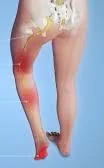
Location & Function Of Sciatic Nerve

  • Sciatic nerve branches from the lower back region pass through the hip region and thigh. It then divides into 2 main branches in the lower part of the thigh- common peroneal nerve and tibial nerve.
  • The sciatic nerve supplies muscles of the back of the thigh and apparently to all the muscles of the whole of leg and foot via its two main branches named above. The sciatic nerve is responsible for sensation in the whole of the leg and foot.

Causes of Sciatic Nerve Injuries

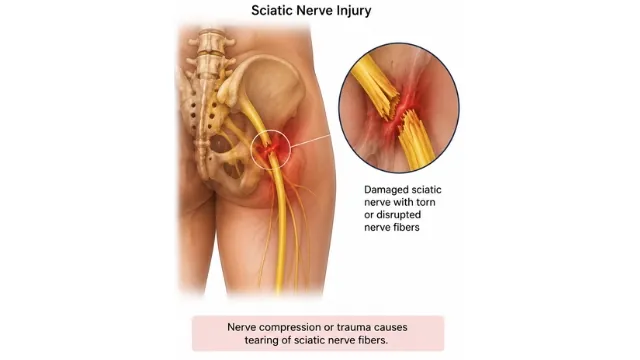
The sciatic nerve can be injured by

  • accidents,
  • compression, or
  • by stretching of the nerve.
  • It can happen in fractures and dislocation of the hip.
  • It is quite commonly wrongly injected with drugs and damaged while given intramuscular injections by untrained professionals.

Symptoms of Sciatic Nerve Injuries

Injuries to the sciatic nerve can cause-

  • Inability to move the foot and toes in both upward and downward directions.
  • Numbness of the whole leg and foot.
  • Tingling and pain in the leg and foot region.
  • Foot drop gait

Diagnosis of Sciatic Nerve Injury

  • Tinel’s sign will be positive– Tapping on the site of injury will elicit tingling and pain sensation in the leg and foot region.
  • Nerve Conduction Velocities (NCV) and Electro-Myographic Studies (EMG) of the affected limb are done.
  • In a few cases, a CT scan or MRI is also indicated to rule out mass lesions.

Debilitating Nature of Sciatic Nerve Injuries

Mainly because of 2 major deficiencies-

  • complete loss of muscle power in the foot and toes.
  • loss of sensation on the sole of the foot -making the patient prone to more injuries and burns over the foot.

Treatment of Sciatic Nerve Injuries

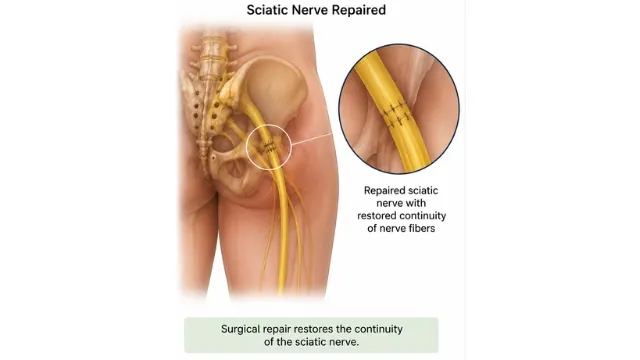
If the sciatic nerve is damaged or cut, then surgical excision of the damaged part and nerve repair/grafting should be done as early as possible or within 3 months of the injury.

Success Rate of Sciatic Nerve Repair

  • The results of repair are not good for sciatic nerve injuries as the injury is most of the time so up and proximal that by the time nerve fibers grow and reach up to the leg region, motor end plates or receptors have already degenerated.
  • The results of sciatic nerve repair are relatively good in children and in patients who come early. The result is better if direct nerve repair is possible without the use of nerve grafting and if the level of injury is not higher up and is in the lower thigh.
  • More than 50% of the patients require secondary procedures in the form of microvascular free-functioning transfer or arthrodesis of the foot even after nerve repair.

Sudden Onset of Sciatic Nerve Paralysis

Then other neurological causes or compression by tumor should be investigated for. In many of such cases, release of the nerve is done and a biopsy of the nerve fascicle and muscle is taken to confirm the diagnosis of neurological disease.

Late Presentation of Sciatic Nerve Injuries

(after 6 months of the accident)

  • Then nerve repair and grafting should be done. It might not help in restoration of the muscle function but can help in restoring the sensation to the sole of the foot.
  • T endon transfers for restoring the muscle movements of the foot cannot be done in sciatic nerve injuries as all the muscles are paralyzed and no tendon is left for transfer.
  • Free-functioning muscle transfer can be attempted by microvascular surgical techniques to restore the function of movement of the ankle and foot in an upward direction. A strong muscle from the thigh is taken with its blood and nerve supply and fixed at 2 different points of the leg and foot. The blood and nerve supply of the muscle is joined with the blood and nerve supply in the region of the leg by microsurgical techniques. The goal is to enable the patient to extend his or her foot and toes at their joints. The surgery is usually done under spinal anesthesia or general anesthesia and a splint or slab is given for immobilization in the post-operative period. The patient is usually discharged tenth day after the surgery. Sutures are removed 3 weeks after surgery. The splint is removed 6 weeks after the surgery and gradual training of the transferred muscles is started so that they regain their newly assigned function.

Location & Function of CPN

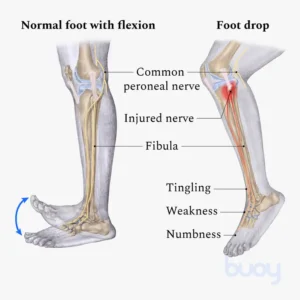
  • Common peroneal nerve (CPN) branches from the sciatic nerve in the lower part of the thigh and passes to the leg from its outer aspect. It then divides into 2 branches-, superficial and deep, which run down the front of the leg and foot region up to the tip of the toes.
  • CPN provides sensation to the front and sides of the legs and to the top of the feet and toes. This nerve also controls the muscles in the leg that lift the ankle and toes upward.

Causes of CPN Injuries

The common peroneal nerve can be injured by accidents, compression, or by stretching of the nerve. It can happen in fractures and dislocation of the knee and leg.

What are the symptoms of sciatic nerve injuries?

Injuries to the peroneal nerve can cause-

  • Inability to point the toes upward or lift the ankle up (dorsiflexion)
  • Numbness on the front of leg, foot, and dorsum of toes
  • Tingling and pain in the front of the leg and foot region.
  • A distinctive style of walking is seen where the knee is raised higher than normal to clear the foot from the ground when the leg swings forward (also called steppage or foot drop gait).

Diagnosis of CPN Injuries

  • Tinel’s sign will be positive– Tapping on the site of injury will elicit tingling and pain sensation in the foot region.
  • Nerve Conduction Velocities (NCV) and Electro-Myographic Studies (EMG) of the affected leg is done
  • In a few cases, a CT scan or MRI is also indicated.

Treatment of Peroneal Nerve Injury

If the peroneal nerve is damaged or cut, then surgical excision of the damaged part and nerve repair/grafting should be done as early as possible or within 6 months of the injury for best results.

What should be done if the patient has presented with sudden onset of paralysis of CPN with no history of injury?

  • If the patient has presented with sudden onset of paralysis of the peroneal nerve, then other neurological causes, leprosy or compression by tumor should be investigated.

What is the management of the patient who has presented late beyond the timing suitable for peroneal nerve repair (after 6 months to 1 year of the accident)

  • In such cases or in cases where the nerve is damaged beyond repair, tendon transfers should be done to strengthen the weak portions of the foot along with nerve repair and grafting (only if feasible). A strong tendon of the leg is re-routed to substitute a weaker or lost movement of the foot.

During tendon transfers for peroneal nerve palsy , one functioning tendon from the inner side of the leg is taken, re-routed, and sutured to the tendons of the front of the foot and toes so that the patient can extend his or her foot and toes at their joints. This tendon transfer also enables and restores normal walking style.

  • The surgery is usually done under spinal anesthesia or general anesthesia and a splint or slab is given for immobilization in the postoperative period.
  • The patient is usually discharged on the second day after the surgery.
  • Sutures are removed 14 days after surgery.
  • The splint is removed 4 weeks after the surgery and gradual training of the transferred muscles or tendons is started so that they regain their newly assigned function.
See the difference

Before & After — Sciatic Nerve Injuries

Drag the handle to compare. All photos are real patients shared with consent.

Images shown are intended to provide general treatment insight only. Every patient is unique, and outcomes may vary depending on individual condition and treatment plan.

Common questions

Frequently asked questions

Where are the sciatic nerve and common peroneal nerve located, and what are their functions?
The sciatic nerve branches from the lower back, extends through the hip and thigh, and provides sensory and motor functions to the leg and foot. The common peroneal nerve (CPN) originates from the thigh and controls leg muscles, while also delivering sensation to the legs and feet.
What are the main causes of sciatic and common peroneal nerve injuries?
Injuries to these nerves can occur due to accidents, nerve compression, stretching, or fractures. They can also be accidentally damaged during injections or medical procedures.
What are the shared symptoms of sciatic and common peroneal nerve injuries?
Both injuries may lead to difficulties in moving the foot and toes, as well as sensations like numbness, tingling, and pain in the leg and foot regions.
How are nerve injuries diagnosed in patients?
Diagnosis typically involves clinical tests like the Tinel’s sign, as well as nerve conduction studies, electromyography (EMG), and in some cases, CT or MRI scans to rule out other underlying issues.
Why are nerve injuries considered debilitating conditions?
Sciatic and common peroneal nerve injuries can lead to a loss of muscle strength in the foot and toes, as well as a decreased sensation in the sole of the foot, making individuals more prone to injuries and burns.
What are the recommended treatments for these nerve injuries?
For the best results, early surgical excision of the damaged part and nerve repair or grafting should be considered. Success rates can vary based on factors like age and timing of treatment.
What are the alternatives when a patient experiences sudden nerve paralysis without prior injuries?
In such cases, it is crucial to investigate other potential neurological causes or nerve compression by tumors to provide an accurate diagnosis.
How do tendon transfers play a role in treating these nerve injuries?
In cases where nerve repair is not feasible or the injury is beyond the suitable repair timing, tendon transfers can strengthen weak areas. These procedures reroute functioning tendons to restore movement and improve patients’ quality of life.
Real stories

What our patients say about Kayakriti

★★★★★
"Kayakriti Plastic Surgery & Dental Clinic is one of the best clinics — excellent doctors and a very professional team. The clinic is clean, well-maintained, and uses advanced technology. Doctors explain everything clearly and make you feel comfortable throughout the treatment. Highly recommended for both plastic surgery and dental care."
B R
★★★★★
"My big brother had a critical accident in August 2025 — his right foot was injured badly. Thanks to Dr Amit, the plastic surgery was a great success and now he is walking on his feet. Dr Amit is polite, humble, and guided us like family."
Arif Mekrani
★★★★★
"Dr Amit Agarwal is really a very good plastic surgeon — he operated on my leg. The treatment is really very good and the staff behaviour is very nice."
Ashish Kumar
★★★★★
"Dr Amit Agarwal performed surgery for diabetic foot on my father. We were very troubled before going to him; after his treatment the condition is much better. He debrided all the infection and did grafting on the same."
Anwar Khan
★★★★★
"Dr Amit Agarwal operated on my patient for a congenital defect. A renowned plastic surgeon of Uttar Pradesh with excellent post-operative results. He explains every step of the treatment very nicely and is very determined towards his work."
Ranjeet Kumar
★★★★★
"Dr Amit is very approachable, so it is easy to talk to him and ask all our queries. Before operating he explains the entire process with all the pros and cons. His staff is well-trained and well-behaved — I had a wonderful experience."
Shashimukesh Verma
★★★★★
"Dr Amit Agarwal operated on my sister who got burnt two years back, leaving burn scars in her neck area. With the help of tissue expanders he has cured her scars to the utmost. Thank you sir for the treatment."
Shantanu Bajpai
★★★★★
"Dr Amit Agarwal operated on my child for a congenital defect and has delivered brilliant results. We are completely satisfied with his treatment and recommend him to everyone."
Ajay Verma
★★★★★
"I consulted Dr Amit Agarwal for my son's gynaecomastia operation. His results have been very good — now my son is much more confident and comfortable with his looks after the operation."
Suneel Kumar
★★★★★
"Dr Amit operated on my patient for a lip augmentation surgery to give her lips a proper cosmetic shape. The post-operative results are very good — she is very satisfied."
Mohd Umair
★★★★★
"Dr Amit Agarwal operated on my son for gynaecomastia. Due to the puffiness in his chest he felt very embarrassed in public. Thanks to Dr Amit's treatment my son feels much better aesthetically and has gained a lot of confidence about his looks."
Shoaib Alam
★★★★★
"We consulted Dr Amit for cosmetic correction of my daughter's facial profile. He brought her upper jaw forward, surgically improving her appearance. It was a tough operation but the results are phenomenal — we are really satisfied with the look now."
Urmila Choudhary
★★★★★
"My son had his fingers joined since birth, causing a lot of functional problems. Dr Amit Agarwal performed syndactyly release on him. Now he is much better and there were no issues regarding post-operative complications."
Sunil Verma
★★★★★
"I got my rhinoplasty done under Dr Amit. The shape of my nose wasn't nice and my facial profile was getting hampered. Dr Amit elevated my nose to give it proper shape — now it is looking fine and I am very satisfied."
Sarwat Fatima
★★★★★
"Dr Amit Agarwal operated on my patient for deformed lips. He gave my patient a very aesthetic appearance and we are highly satisfied by the surgery. The cosmetic correction was successful with no complications."
Jayanti
★★★★★
"Dr Amit Sir is really a very good plastic surgeon — great nature, very cooperative staff, excellent scope for cosmetic treatment. Very happy and satisfied with the treatment. It really changed my life and enhanced my confidence."
Ravi Kashyap
★★★★★
"Dr Amit Agarwal performed cosmetic surgery on my nephew, who was facing a lot of issues with confidence due to gynaecomastia. After Dr Amit's treatment he is much better and has a boosted confidence level."
Upendra Kumar
★★★★★
"I met a road accident two months back and my ring finger fractured. My orthopaedic doctor recommended Dr Amit for the joint fracture management. After he operated, my condition is much better."
Rahul Singh
★★★★★
"Dr Amit Agarwal operated on my patient for vascular malformation. He removed the complete swelling through an operation which went well and the results are good. The staff kept us well informed at every step and the whole process went smoothly."
Prem Kumar
★★★★★
"My patient wasn't satisfied with the aesthetic appearance of her lips. Dr Amit performed a lip augmentation surgery — it made her lips look more full and richer. She is very satisfied with the results."
Chandan Kumar Verma
★★★★★
"We were very troubled after my son met a road accident in which his jaw got fractured. Dr Amit confirmed the diagnosis quickly and proceeded for the surgery — through plating he joined the bones of the jaw and stabilised it. The condition now is much better."
Amit Pandey
★★★★★
"My brother is diabetic and hurt his leg; the wound was not healing for a long time. Dr Amit debrided all the infected part and covered it with a flap. The wound is now healed — we are lucky we got the correct treatment on time."
Daram Singh

All reviews verified on our Google profile.

Have a question about Sciatic Nerve Injuries?

One free video consultation. Honest answers. No pressure.

or call us at +91 96 95 94 0009 +91 96 95 94 0006

Chat with us