Introduction
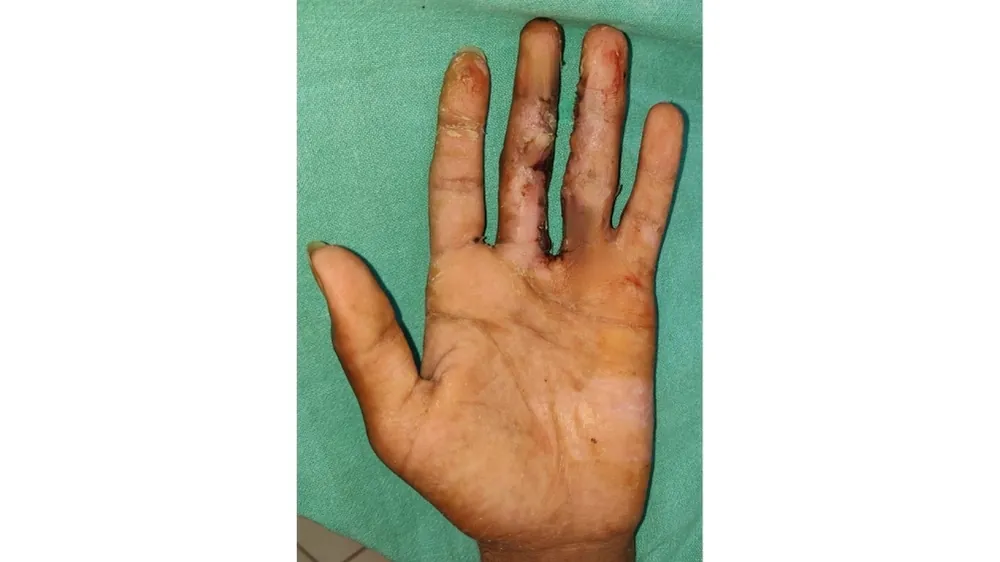
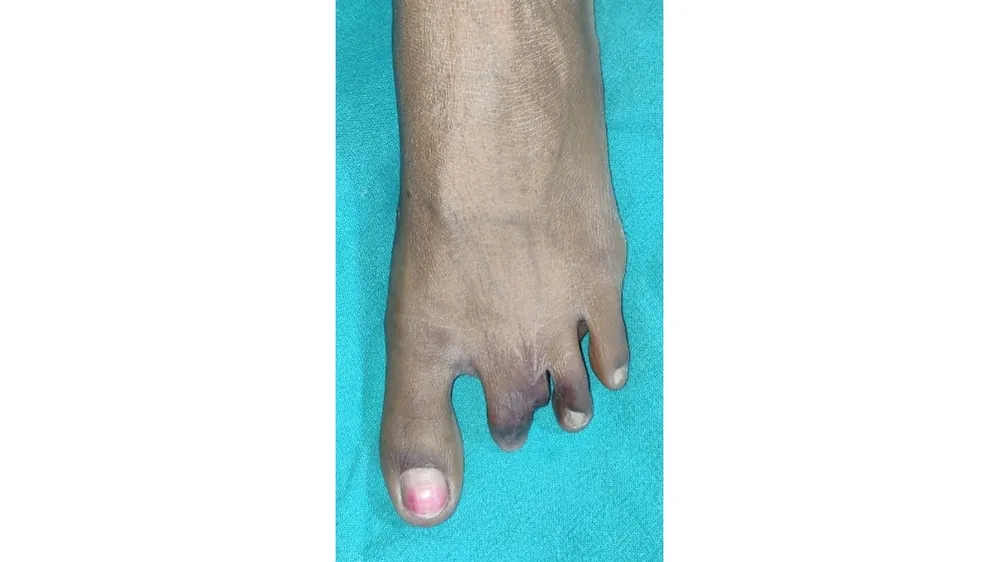
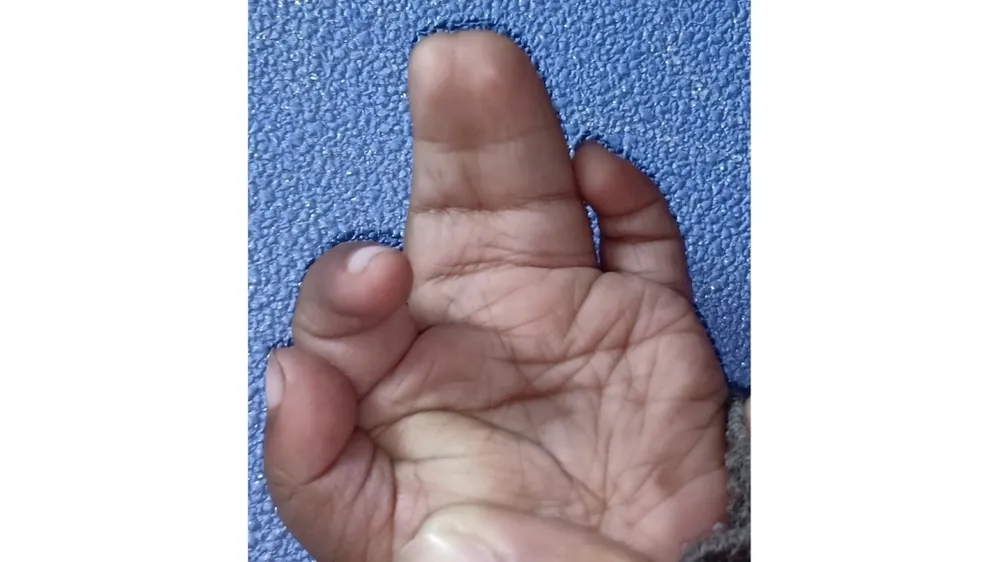
Syndactyly, a condition where fingers are fused or joined, is one of the most common congenital anomalies seen in children, occurring in approximately 1 in 2000 live births, with males more commonly affected than females. This condition often affects the fingers of the hand, but in some cases, it can involve the toes as well.
Causes of Syndactyly
Syndactyly develops during fetal development when the baby’s hand initially forms as a paddle and later divides into individual fingers. The condition is primarily caused by a failure of apoptosis (cell absorption), which is essential for the separation of fingers. It is worth noting that syndactyly can have a genetic component, with 10 to 40 percent of affected children inheriting the condition from a parent.
Commonly Involved Fingers
The fingers most commonly affected by syndactyly, in decreasing order, are:
- The middle finger and ring finger
- The ring finger and little finger
- Index finger and middle finger
- Thumb and index finger
- Multiple fingers of one or both hands
Diagnosis and Types of Syndactyly
Syndactyly is diagnosed when a child is born with webbed or joined fingers. Prenatal diagnosis is possible through a level 2 ultrasound. X-rays are conducted to assess bone fusion. Syndactyly is categorized into:
Simple Syndactyly : Fingers are joined by skin and soft tissue only.
Complex Syndactyly : Skin and soft tissue involvement, along with fusion of underlying finger bones.
Complicated Syndactyly : Involves soft tissue and bone fusion, along with abnormal bone and ligament development.
Treatment of Syndactyly
The primary and often only treatment for syndactyly is surgery.
a) Creation of a web space between fingers,
b) Treating the lateral soft-tissue defects – by zigzag skin plasty
c) Skin grafting on less demanding parts of the fingers. Full-thickness skin graft is mostly used to cover the defect.
d) Separation of the fingertips –
- If the nails are separately developed in complete syndactyly, the pulp can be separated and the skin advanced to the margin of the nail.
- If the nails are conjoined, nail wall reconstruction with flaps is necessary. Buck-Gramcko pedicled pulp flaps for nail wall reconstruction from adjacent finger pulp are done for reconstruction.
Surgical Procedure at Kayakriti
The surgical approach to syndactyly involves the separation of conjoined skin and subcutaneous tissues while preserving nerve and vessel integrity. The procedure aims to create a web space between fingers, address lateral soft tissue defects using zigzag skin plasty, and perform skin grafting to cover the defects. Separating fingertips is also a key aspect of the procedure, allowing for improved function and aesthetics.
Recovery after Syndactyly Surgery
After surgery, the child is typically discharged within a day. Dressings are changed after 5 to 7 days with subsequent dressings every 3 to 4 days. Immobilization is advised for 6 weeks, followed by regular physiotherapy and night-time splinting for 3 months to prevent contractures and promote optimal recovery.