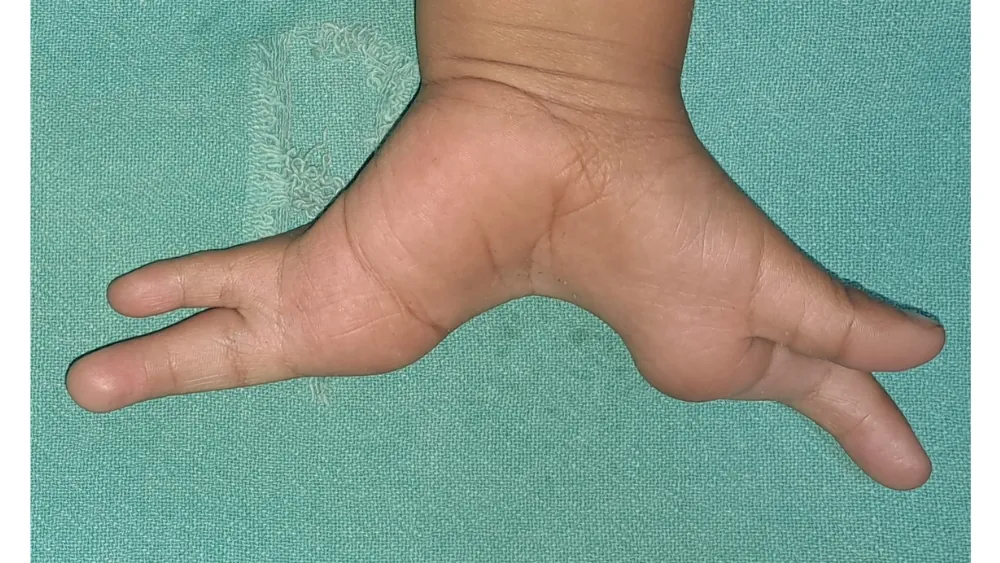
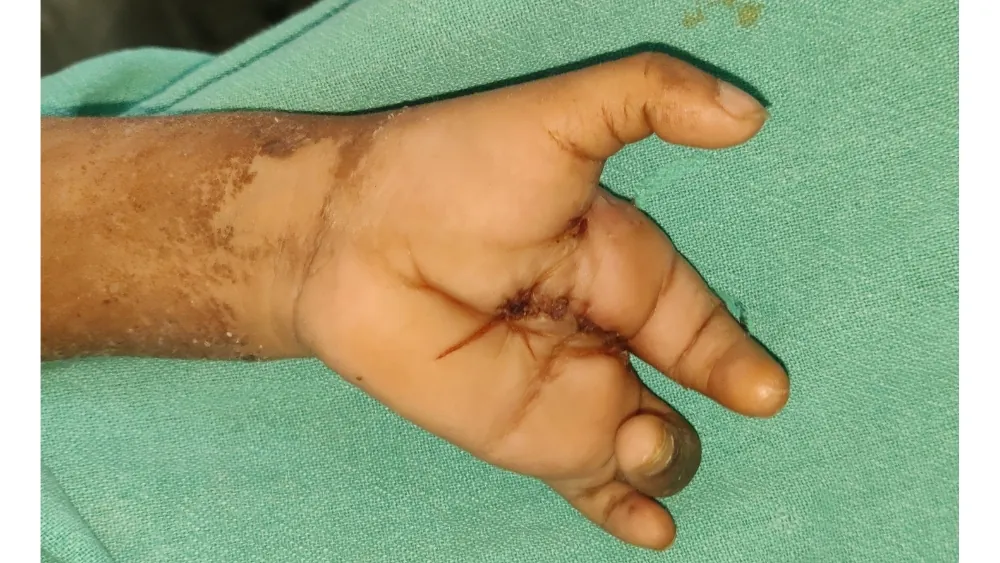
Introduction
Cleft hand and foot are rare congenital abnormalities in which the central part, comprising fingers or toes, is missing since birth. These conditions, although relatively uncommon, can significantly impact children and their families. In this comprehensive guide, we delve into the incidence, causes, diagnosis, and treatment of cleft hand and foot, shedding light on the challenges these children may face and the surgical approaches employed for their care at Kayakriti.
Incidence of Cleft Hand/Foot
Cleft hand is a relatively uncommon condition, accounting for less than 5 percent of all congenital hand abnormalities. The incidence rate is approximately 1 in 100,000 live births. It can affect one hand, or in some cases, both hands, and children born with a cleft hand may also have a cleft foot.
Causes of Cleft Hand/Foot
Cleft hand and foot are typically observed after birth, with the exact cause remaining unknown. It is believed to be related to the abnormal development of the hand or foot during pregnancy and can also have genetic links.
Diagnosis of Cleft Hand/Foot
This condition may not always be detected through routine prenatal ultrasounds, and typically, it is identified after the child is born. Diagnosis involves a physical examination that reveals the absence of one or more fingers in the central area, creating a V-shaped cleft. X-rays of the affected hand or foot are also performed, and additional congenital anomalies may be assessed, such as cleft lip and palate or heart and brain deformities.
Challenges Children Face with Cleft Hand/Foot
Children with cleft hand or foot are often well-adjusted and do not experience significant functional impairments, even when part of their hand or foot is missing. In severe cases, functional limitations may hinder hand or foot usage.
Treatment for Cleft Hand/Foot
Parents of children with no functional deformities typically seek cosmetic corrections, achievable through surgical management. Occupational therapy remains essential post-surgery. In cases of functional deformities, surgery is also required.
Surgical Approach at Kayakriti
Cosmetic surgical correction is typically performed after the child reaches one year of age. The procedure involves:
- Closing the cleft.
- Ensuring the functional status of the hand.
- Creating an adequate 1st web space (the space between the thumb and index finger).
- Utilizing local flaps for cleft closure; regional and distant flaps may be employed when necessary.
- Stabilizing hand or foot bones using k-wire fixation.
Recovery After Surgery for Cleft Hand/Foot
Following the surgical procedure for cleft hand or foot, the affected hand or foot is immobilized with a splint for six weeks. The k-wire used for stabilization is removed after this period, and physiotherapy is initiated. It includes range of motion exercises and nighttime splinting for the next three months to promote a smooth recovery.