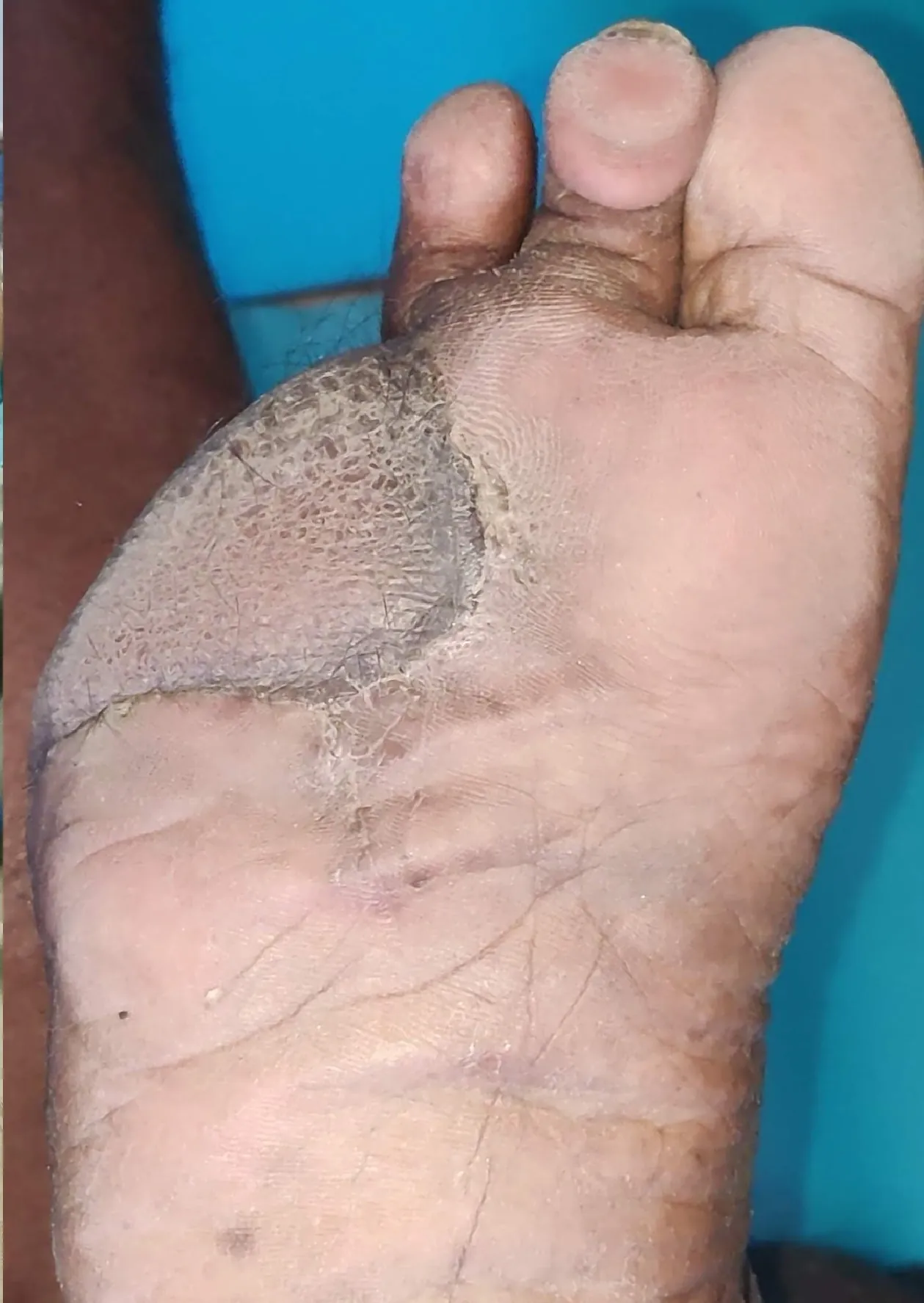
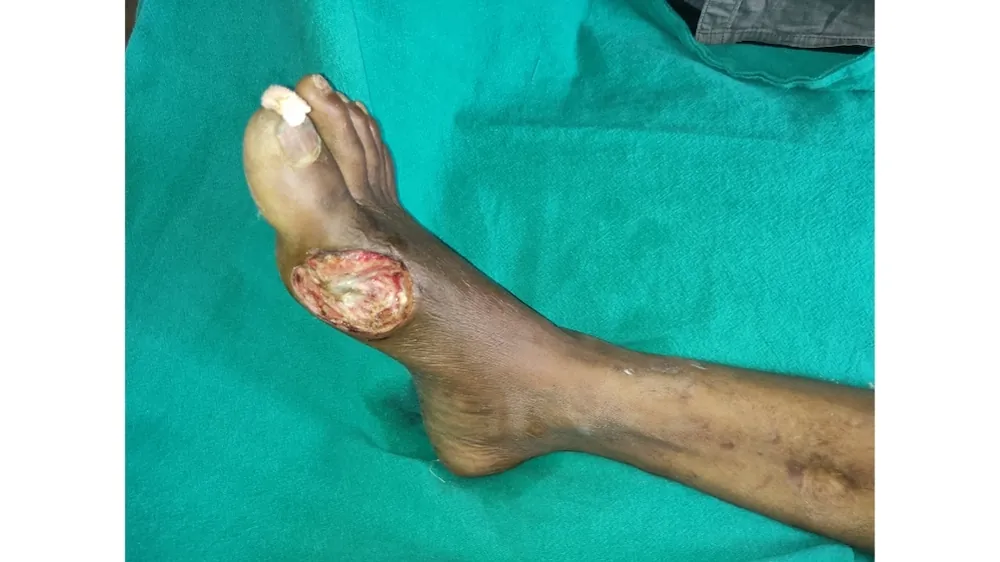
Diabetic foot encompasses any foot pathology resulting from chronic complications of diabetes. The treatment of diabetic foot varies depending on its severity, a determination made during consultation with Dr. Amit Agarwal . Treatment options include both non-surgical and surgical approaches, with a success rate of approximately 80%-90%, meaning that 80-90 out of 100 feet can be saved from amputation.
Diabetic Foot Surgery — explained on video
Procedure explainers, surgeon Q&A, and patient stories — straight from Dr. Amit Agarwal.
This video is for educational purposes only.
Treatments are individualised according to each patient's condition and
needs. Similar results cannot be guaranteed for every individual.
Introduction
Diabetic foot encompasses any foot pathology resulting from chronic complications of diabetes. The treatment of diabetic foot varies depending on its severity, a determination made during consultation with Dr. Amit Agarwal . Treatment options include both non-surgical and surgical approaches, with a success rate of approximately 80%-90%, meaning that 80-90 out of 100 feet can be saved from amputation.
Non-Surgical Treatment for Diabetic Foot
Non-surgical treatment is suitable for early cases of diabetic foot and includes the following:
Wound Care : Keeping wounds clean and properly dressed.
Immobilization Devices : Using devices like cast boots.
Observation : Regularly monitoring the toe and foot for any signs of infection or gangrene.
Corn and Callosity Treatment : Timely management of corns or callosities on the foot.
Blood Sugar Control : Maintaining proper control of blood sugar levels.
Surgical Treatment for Diabetic Foot
When non-surgical treatments prove insufficient, surgery becomes a viable option, with the choice of surgical procedures dependent on the severity of the condition.
Staged Surgical Procedures
Surgical procedures for diabetic foot can be divided into four stages:
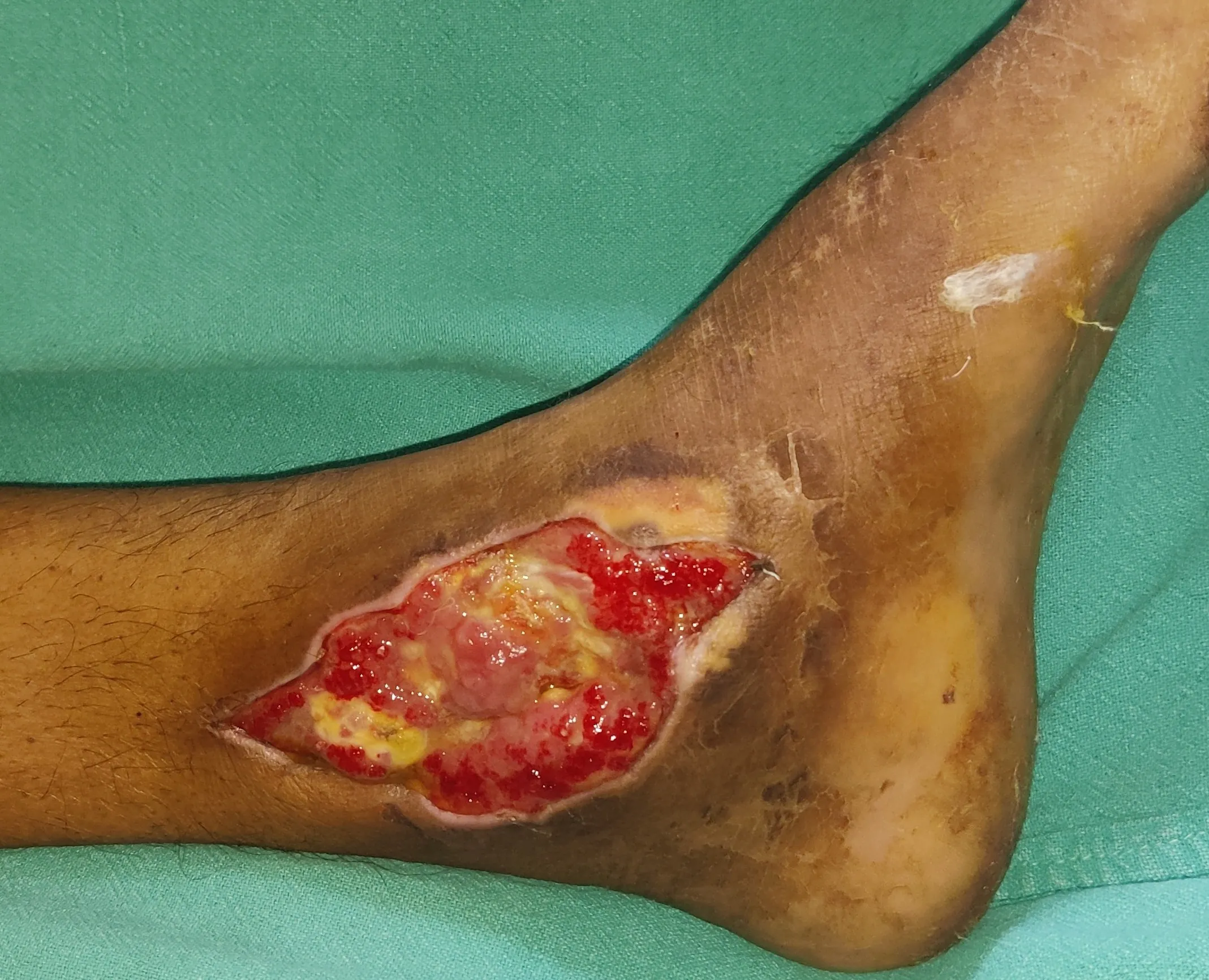
Stage 1 – Debridement/Fasciotomy :
What is Debridement surgery?
Debridement is the thorough cleaning of the wound and removing unhealthy infected and dead tissues from the wound.
What is Fasciotomy surgery?
If the patient presents with rapidly increasing swelling, redness, or pain in the leg and foot, and even after antibiotic treatment it does not subside, it can lead to compartment syndrome (increased pressure in the muscle compartment). This is an emergency condition and urgent Fasciotomy is required to relieve the pressure otherwise it can lead to gangrene of the limb and severe sepsis in the whole body.
How is fasciotomy done in diabetic foot?
In this, we give long incisions over the leg and foot such that pus, excess fluids, and toxins are drained without disturbing the blood supply of the limb.
In cases of large and dirty wounds, debridement is done along with fasciotomy.
Is one debridement surgery enough for diabetic foot?
The patient may require more than one debridement surgery to remove the unhealthy portion of the wound if the wound is very large and dirty. After this, regular dressings are done daily.
What is the next step after debridement/fasciotomy?
After initial fasciotomy and debridement, Negative Pressure Wound Therapy (VAC) before the definite procedure is done to reduce the toxins and infection in the body.
Stage 2 – Skin Grafting :
What is the next stage after debridement surgery in the diabetic foot?
After the wound area has settled, a definite Procedure to close the wound is done last which may be skin grafting, local or free flaps as per the requirement of the wound.
What is skin grafting? When is it done for diabetic foot?
Skin grafting is the transfer of a thin sheet of skin, usually taken from the thigh, to cover the raw areas of the leg and foot region. Once the wound is healthy, skin grafting may be done if the defect is not much deep and vital structures are embedded in granulation tissue.
Post-operative recovery in skin grafting-
Dressing is done every alternate day after surgery.
Patients may be discharged from the hospital after 2-3 days, and
Regular follow-up is required.
The area gradually heals and needs a compression garment later to avoid hypertrophy of scars and to reduce swelling.
Stage 3 – Flap Surgery :
When is FLAP surgery done on Diabetic foot?
If the wound is deep and any vital structure is visible & exposed, like a blood vessel, nerve, bone, or tendons, then flap surgery is advised in the diabetic foot, and skin grafting is not done.
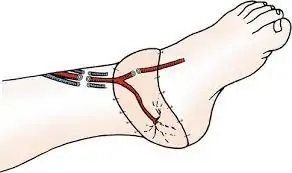
What is a local flap?
The local flap is the transfer of the flap of skin from the surrounding areas to the defect site. It is done when the defect is deep, and the surrounding area is normal and sufficient enough to cover the defect.
What is a free flap? ( Microvascular reconstruction )-
If not, or the local flap fails, then a flap taken from other parts of the body is used to cover the wound through microvascular reconstruction .
It needs surgical expertise and a good working team. Dr Amit Agarwal specializes in diabetic foot microsurgical reconstruction and has saved innumerable feet and legs from amputation.
Post-operative recovery in Free Flap-
The flap should be monitored frequently post-surgery.
Hospital stay is increased, with respect to skin grafting or local flap procedures, but it is the best modality to cover the defects in diabetic foot patients.
The dressing is done every alternate day and the patient is admitted for at least 7-8 days and discharged once the flap is settled.
What are the results of microvascular surgery in Diabetic foot?
The results of microsurgical reconstruction in the diabetic foot can be quite unpredictable as it is dependent on multiple factors like the status of blood vessels, the level of immunity of the patient, and his/ her health status and protein level to withstand the procedure.
What is the routine care required after surgery for diabetic foot?
After the surgery, the patient is bedridden for 2-3 weeks.
No ambulation is advised, and the limb has to be elevated by using pillows underneath.
After several dressings, when the operated site is completely stable, the patient is given a pressure garment and ambulation is started.
Shoe modification is required to prevent future injury and offloading from the pressure points.
Stage 4 – Amputation of the Limb :
What is an Amputation?
Removal of the limb or toe is responsible for spreading the infection from the body.
When is amputation required in the diabetic foot?
If a patient fails to reach the appropriate hospital or doctor for management of such cases on time, or due to other comorbidities, which decrease the immunity of the body, delay in healing occurs and infection spreads much more quickly. In this scenario, the patient might require amputation, which means it becomes imperative to remove the affected portion of the foot or leg from the body.
What are the levels of amputation required in neglected diabetic feet?
Amputation is done when the severity is to the fullest and the main motive is to save the life of the patient. Amputation can be of a toe, forefoot, midfoot, or below-knee amputation depending on the part of the limb that needs to be removed.
The level of amputation depends not only upon the extent of the disease but also on the function desired in the remaining stump.
What is the incidence of amputation in Diabetics?
In peripheral artery disease, the probability of amputation within one year after the first ulcer or gangrene is 34.1% and the death rate has been reported to be 5.5%.
What are the various indications for amputation in diabetics?
The viability of a part is destroyed by injury or disease – a dead limb.
The life of a patient is at risk because of the spread of a local infection – a deadly limb.
Patients may be better served by an artificial limb because of deformity or paralysis -a deformed limb.
Dying limb – acutely ischemic limb (sudden onset of black discoloration of limb), late presentation.
When is prosthesis advised after amputation of the limb in diabetes?
Post amputation when the stump completely settles, after about 2-3 months period, a prosthetic limb is advised.
Post-Surgery Care and Rehabilitation
After surgery, patients are typically bedridden for 2-3 weeks.
No ambulation is advised initially, and the limb should be elevated using pillows.
Once the operated site stabilizes, patients are given compression garments, and rehabilitation is initiated.
Shoe modifications may be necessary to prevent future injuries and alleviate pressure points.
Conclusion
Diabetic foot surgery aims to preserve limbs and lives. Recognizing the severity of the condition and consulting with a specialist like Dr. Amit Agarwal is crucial in achieving successful outcomes. Whether through non-surgical or staged surgical approaches, timely intervention is essential in the treatment of diabetic foot to prevent complications and improve the patient’s quality of life.
See the difference
Before & After — Diabetic Foot Surgery
Drag the handle to compare. All photos are real patients shared with consent.
Before
After
Before
After
Before
After
Images shown are intended to provide general treatment insight only.
Every patient is unique, and outcomes may vary depending on individual
condition and treatment plan.
Common questions
Frequently asked questions
What are Diabetic Foot Surgeries, and when are they recommended as part of diabetes management?
Diabetic Foot Surgeries are procedures performed to treat complications such as ulcers, infections, or deformities in individuals with diabetes. They are recommended when conservative treatments are not effective.
What are the common types of Diabetic Foot Surgeries, and how do they contribute to improved foot health?
Common types of Diabetic Foot Surgeries include wound debridement, abscess drainage, and foot reconstruction. These surgeries aim to alleviate pain, prevent further complications, and enhance mobility.
How does the surgical process work for Diabetic Foot Surgeries, and what is the expected recovery period?
Diabetic Foot Surgeries involve removing infected tissue, repairing damaged structures, or restoring deformities. Recovery periods vary depending on the surgery’s complexity but typically involve wound care and physical therapy.
What are the potential risks and benefits associated with Diabetic Foot Surgeries, and how can individuals make informed decisions about surgery?
The benefits of Diabetic Foot Surgeries include improved foot function and reduced risk of amputation, while risks may include infection or delayed wound healing. Individuals should discuss the pros and cons with their healthcare provider.
How does Kayakriti Clinic specialize in Diabetic Foot Surgeries, and what makes their approach unique in addressing these surgical needs?
Kayakriti Clinic specializes in performing Diabetic Foot Surgeries with a focus on minimally invasive techniques, advanced wound care, and a multidisciplinary team of specialists to optimize patient outcomes.
What are the advantages of choosing Kayakriti Clinic for Diabetic Foot Surgeries, and how do they ensure comprehensive care for diabetic patients?
Kayakriti Clinic offers a patient-centric approach to Diabetic Foot Surgeries, with access to cutting-edge technology, experienced surgeons, and tailored post-surgical care plans to promote swift recovery.
Real stories
What our patients say about Kayakriti
★★★★★
"Kayakriti Plastic Surgery & Dental Clinic is one of the best clinics — excellent doctors and a very professional team. The clinic is clean, well-maintained, and uses advanced technology. Doctors explain everything clearly and make you feel comfortable throughout the treatment. Highly recommended for both plastic surgery and dental care."
★★★★★
"My big brother had a critical accident in August 2025 — his right foot was injured badly. Thanks to Dr Amit, the plastic surgery was a great success and now he is walking on his feet. Dr Amit is polite, humble, and guided us like family."
★★★★★
"Dr Amit Agarwal is really a very good plastic surgeon — he operated on my leg. The treatment is really very good and the staff behaviour is very nice."
★★★★★
"Dr Amit Agarwal performed surgery for diabetic foot on my father. We were very troubled before going to him; after his treatment the condition is much better. He debrided all the infection and did grafting on the same."
★★★★★
"Dr Amit Agarwal operated on my patient for a congenital defect. A renowned plastic surgeon of Uttar Pradesh with excellent post-operative results. He explains every step of the treatment very nicely and is very determined towards his work."
★★★★★
"Dr Amit is very approachable, so it is easy to talk to him and ask all our queries. Before operating he explains the entire process with all the pros and cons. His staff is well-trained and well-behaved — I had a wonderful experience."
★★★★★
"Dr Amit Agarwal operated on my sister who got burnt two years back, leaving burn scars in her neck area. With the help of tissue expanders he has cured her scars to the utmost. Thank you sir for the treatment."
★★★★★
"Dr Amit Agarwal operated on my child for a congenital defect and has delivered brilliant results. We are completely satisfied with his treatment and recommend him to everyone."
★★★★★
"I consulted Dr Amit Agarwal for my son's gynaecomastia operation. His results have been very good — now my son is much more confident and comfortable with his looks after the operation."
★★★★★
"Dr Amit operated on my patient for a lip augmentation surgery to give her lips a proper cosmetic shape. The post-operative results are very good — she is very satisfied."
★★★★★
"Dr Amit Agarwal operated on my son for gynaecomastia. Due to the puffiness in his chest he felt very embarrassed in public. Thanks to Dr Amit's treatment my son feels much better aesthetically and has gained a lot of confidence about his looks."
★★★★★
"We consulted Dr Amit for cosmetic correction of my daughter's facial profile. He brought her upper jaw forward, surgically improving her appearance. It was a tough operation but the results are phenomenal — we are really satisfied with the look now."
★★★★★
"My son had his fingers joined since birth, causing a lot of functional problems. Dr Amit Agarwal performed syndactyly release on him. Now he is much better and there were no issues regarding post-operative complications."
★★★★★
"I got my rhinoplasty done under Dr Amit. The shape of my nose wasn't nice and my facial profile was getting hampered. Dr Amit elevated my nose to give it proper shape — now it is looking fine and I am very satisfied."
★★★★★
"Dr Amit Agarwal operated on my patient for deformed lips. He gave my patient a very aesthetic appearance and we are highly satisfied by the surgery. The cosmetic correction was successful with no complications."
★★★★★
"Dr Amit Sir is really a very good plastic surgeon — great nature, very cooperative staff, excellent scope for cosmetic treatment. Very happy and satisfied with the treatment. It really changed my life and enhanced my confidence."
★★★★★
"Dr Amit Agarwal performed cosmetic surgery on my nephew, who was facing a lot of issues with confidence due to gynaecomastia. After Dr Amit's treatment he is much better and has a boosted confidence level."
★★★★★
"I met a road accident two months back and my ring finger fractured. My orthopaedic doctor recommended Dr Amit for the joint fracture management. After he operated, my condition is much better."
★★★★★
"Dr Amit Agarwal operated on my patient for vascular malformation. He removed the complete swelling through an operation which went well and the results are good. The staff kept us well informed at every step and the whole process went smoothly."
★★★★★
"My patient wasn't satisfied with the aesthetic appearance of her lips. Dr Amit performed a lip augmentation surgery — it made her lips look more full and richer. She is very satisfied with the results."
★★★★★
"We were very troubled after my son met a road accident in which his jaw got fractured. Dr Amit confirmed the diagnosis quickly and proceeded for the surgery — through plating he joined the bones of the jaw and stabilised it. The condition now is much better."
★★★★★
"My brother is diabetic and hurt his leg; the wound was not healing for a long time. Dr Amit debrided all the infected part and covered it with a flap. The wound is now healed — we are lucky we got the correct treatment on time."