In the intricate landscape of our hands, nerves play a pivotal role in providing sensation and guiding our every movement. The median, radial, and ulnar nerves are vital components of the arm, ensuring that our hands function seamlessly. When these nerves face injuries or paralysis, it can lead to significant challenges and discomfort.
About Kayakriti and Your Surgeon
A short walk-through of our Lucknow clinic, plus a brief introduction from Dr. Amit Agarwal.
In the intricate landscape of our hands, nerves play a pivotal role in providing sensation and guiding our every movement. The median, radial, and ulnar nerves are vital components of the arm, ensuring that our hands function seamlessly. When these nerves face injuries or paralysis, it can lead to significant challenges and discomfort.
Introduction
Median nerve is one of the major nerves of forearm and hand. It originates from the brachial plexus in the arm pit.
What is the function of median nerve?
The median nerve provides-
Sensation to the thumb, index, and middle fingers, and to half of the ring finger. The small finger (the “pinky”) is typically not affected.
This nerve is also responsible for the major movements of the thumb.
What causes median nerve paralysis?
Paralysis or palsy of the median nerve is usually seen in
Injuries of the median nerve or
In patients with leprosy or
In long-standing compression of the median nerve.
What are the symptoms if median nerve is injured or cut?
Muscles of the hand (base of the thumb) atrophy and will –
He or she would not be able to bring out the thumb in a perpendicular direction to the palm when the hand is placed flat on the table.
Loss of ability of the thumb to touch tips of other fingers.
Loss of coarse movements of the hand.
There will be a complete loss of sensation over the thumb, index, middle, and half of the ring finger.
How is median nerve injury diagnosed?
Tinel’s sign will be positive– Tapping on the site of injury will elicit tingling and pain sensation in the thumb, index finger, and middle finger
To confirm the diagnosis- Nerve Conduction Velocities (NCV) and Electro-Myographic Studies (EMG) of the affected hand are done.
How are median nerve injuries treated?
If the median nerve is damaged or cut , then surgical excision of the damaged part and nerve repair or grafting should be done as early as possible or within 1 year of the injury for best results.
Can patients present with median nerve paralysis with causes other than trauma?
If the patient has presented with a sudden onset of paralysis of the median nerve , then other neurological causes or leprosy should be investigated for. In many such cases, a nerve and muscle biopsy is taken to confirm the diagnosis of neurological disease or leprosy
If the patient presents with gradual paralysis of the median nerve , then median nerve compression – carpal tunnel syndrome , Anterior interosseus nerve syndrome should be thought of and managed accordingly.
What should be done if the patient has presented late beyond the timing suitable for nerve repair (after 1.5 year of the accident)?
In patients who present late or in cases where the nerve is damaged beyond repair, then tendon transfers should be done to strengthen the weak portions of the hand along with the nerve repair and grafting (only if feasible).
A strong functioning tendon of the hand is re-routed to substitute a weaker or lost movement of the hand.
During tendon transfers for median nerve palsy , one functioning tendon from the front of the hand is taken, re-routed, and sutured to the tendon of the outer aspect of the thumb so that the patient can abduct (bring out thumb) and also make a meaningful pinch with the other fingers. This would enable him or her to hold objects with the thumb and fingers (OPPONENSPLASTY).
The surgery is usually done under brachial block or general anesthesia and a splint or slab is given for immobilization in the post-operative period.
The patient is usually discharged on the second day after the surgery. Sutures are removed 14 days after surgery.
The splint is removed 3 to 4 weeks after the surgery and gradual training of the transferred tendon is started so that it may regain its newly assigned function.
Introduction
The radial nerve is one of three nerves in your forearm, traveling from the side of your neck, down the back of your arm, through your forearm and into your hand.
What is the function of radial nerve?
Your radial nerve is responsible for a lot of different arm movements, including-
forearm rotation,
elbow straightening, and
wrist and finger movements.
It also supplies sensation to half of the back of the hand on the side of the thumb.
What causes radial nerve paralysis?
Paralysis or palsy of the radial nerve is usually seen in
injuries of the radial nerve or
in patients with leprosy or
in long-standing compression of the radial nerve.
What are the symptoms if radial nerve is injured or cut?
Atrophy of the muscles of the back of the forearm.
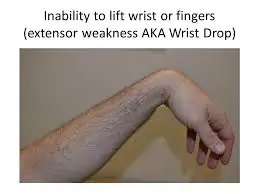
He or she would have permanent wrist, finger, and thumb drops. Which means being unable to straighten or extend the wrist, fingers, and thumb.
Loss of sensation on half of the back of the hand
There will be a complete loss of sensation over the thumb, index, middle, and half of the ring finger.
What is wrist drop?
Such conditions of wrist drop and finger, thumb drop (inability to extend the wrist, thumb, and fingers) are usually seen in injuries of the radial nerve after accidents or fractures of the humerus (bone of the arm) or in long-standing compression of the radial nerves due to tumors or other reasons.
How is radial nerve injury diagnosed?
Tinel’s sign will be positive– Tapping on the site of injury will elicit tingling and pain sensation in the back of the hand.
To confirm the diagnosis- Nerve Conduction Velocities (NCV) and Electro-Myographic Studies (EMG) of the affected hand are done.
How are radial nerve injuries treated?
If the radial nerve is damaged or cut , then surgical excision of the damaged part and nerve repair or grafting should be done as early as possible or within 1 year of the injury for best results.
Can patients present with radial nerve paralysis with causes other than trauma?
If the patient has presented with sudden onset of paralysis of the radial nerve, then other neurological causes or any nerve tumor should be investigated for.
If the patient presents with gradual paralysis of the radial nerve , then radial nerve compression – radial tunnel syndrome , Posterior interosseus nerve syndrome should be thought of and managed accordingly.
What should be done if the patient has presented late beyond the timing suitable for nerve repair (after 1.5 year of the accident)?
If the patient has presented late beyond the timing suitable for nerve repair (after 1.5 years of accident) , or in cases where the nerve is damaged beyond repair, then tendon transfers should be done to strengthen the weak portions of the hand. A strong tendon of the hand is re-routed to substitute a weaker or lost movement of the hand.
During tendon transfers for radial nerve palsy , 3 functioning tendons from the front of the forearm and hand are taken, re-routed, and sutured to the tendons of the back of the forearm and hand so that the patient can extend his wrist, fingers, and thumb.
The surgery is usually done under brachial block or general anesthesia and a splint or slab is given for immobilization in the post-operative period.
The patient is usually discharged on the second day after the surgery.
Sutures are removed 14 days after surgery.
Splint is removed 3 to 4 weeks after the surgery and gradual training of the transferred muscles or tendons is started so that they regain their newly assigned function.
Introduction
The ulnar nerve goes from neck down to your arm, forearm and to your hand.
What is the function of ulnar nerve?
The ulnar nerve provides sensation to the small finger and half of the ring finger and controls fine movements of the fingers.
This is a very important nerve of the hand as it is responsible for hand grip strength and stability.
What causes ulnar nerve paralysis?
Paralysis or palsy of the ulnar nerve is usually seen in
Injuries of the ulnar nerve or
In patients with leprosy or
In long-standing compression of the ulnar nerve.
What are the symptoms if ulnar nerve is injured or cut?
Small muscles of the hand are paralyzed.
He or she would not be able to bring the fingers together or separate them.
He or she would be having permanent curling of little and ring finger (inability to extend or straighten fingers at the middle and distal finger joints)-ULNAR CLAW HAND.
The flat appearance of the palm
The hollowed-out appearance of the palm and back of the hand
Loss of fine movements of the hand
Complete loss of sensation over the little and the ring finger.
How is ulnar nerve injury diagnosed?
Tinel’s sign will be positive– Tapping on the site of injury will elicit tingling and pain sensation in the little and ring finger.
To confirm the diagnosis- Nerve Conduction Velocities (NCV) and Electro-Myographic Studies (EMG) of the affected hand are done.
How are ulnar nerve injuries treated?
If the ulnar nerve is damaged or cut , then surgical excision of the damaged part and nerve repair or grafting should be done as early as possible or within 1 year of the injury for best results.
Can patients present with ulnar nerve paralysis with causes other than trauma?
If the patient has presented with sudden onset of paralysis of the ulnar nerve , then other neurological causes or leprosy should be investigated for. In many such cases, the release of the cubital tunnel with anterior transposition of the nerve is done and a biopsy of the nerve fascicle and muscle is taken to confirm the diagnosis of neurological disease or leprosy
If the patient presents with gradual paralysis of the ulnar nerve , then ulnar nerve compression – Cubital tunnel syndrome , Guyon’s tunnel compression syndrome should be thought of and managed accordingly.
What should be done if the patient has presented late beyond the timing suitable for nerve repair (after 1.5 year of the accident)?
If the patient has presented late or the ulnar nerve is damaged beyond repair, then tendon transfers should be done to strengthen the weak portions of the hand along with nerve repair and grafting (only if feasible). A strong tendon of the hand is re-routed to substitute a weaker or lost movement of the hand.
During tendon transfers for ulnar nerve palsy , 2 functioning tendons from the front of the forearm and hand are taken, re-routed, and sutured to the tendons of the side of the fingers so that the patient can extend his or her fingers at their finger joints. This tendon transfer also enables a meaningful side pinch of the thumb.
The surgery is usually done under brachial block or general anesthesia and a splint or slab is given for immobilization in the post-operative period.
The patient is usually discharged on the second day after the surgery.
Sutures are removed 14 days after surgery.
Splint is removed 3 to 4 weeks after the surgery and gradual training of the transferred muscles or tendons is started so that they regain their newly assigned function.
Where are digital nerves located? And what is its function?
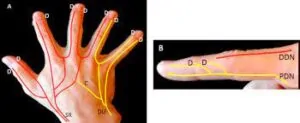
Digital nerves are nerves of the fingers that travel from the palm to the tips of the fingers and thumb. Each finger and thumb have 2 digital nerves running on the sides of the finger. They are responsible to provide sensation of pain, touch, temperature and pressure of their respective sides of the finger.
What causes digital nerve injuries?
They can be commonly damaged by accidental injuries and less commonly by pressure or stretching. Injury to digital nerve stops the transmission of signals to and from the brain resulting in loss of sensation in the fingers.
What are the types of digital nerve injuries?
Digital nerve injuries can be partial or complete. Repair is routinely recommended for complete injuries (completely cut nerve fibers). Injuries that only bruise the nerve or are partial, typically heal on their own in a few weeks.
Why is it important to repair digital nerves if found cut or injured?
Nerve repair after digital nerve injuries is important. If repair is not done, the sensory loss can leave the finger more prone to injuries and burns.
How are Digital nerve Injuries treated?
Since the sensory receptor does not degenerate, therefore, sensory nerve repair can be done anytime or years after the injury.
Digital nerve repair is a microsurgical procedure to reconnect the severed ends of a digital nerve in the finger or hand under the microscope. In a few cases where end-to-end repair is not possible, a suitable nerve graft is harvested from the back of the wrist or from the leg and the nerve is repaired with nerve grafting.
Recovery After Surgery
Nerve fibres typically begin to regrow about three or four weeks after surgery. During this time, patients must wear a splint to prevent the repaired nerve from stretching apart.
Patients usually feel pins and needles in the fingertips, which is a sign that the nerve is healing.
Nerve growth is gradual, and it can take as long as few months before sensation returns to the fingertips.
See the difference
Before & After — Hand Nerve Injuries
Drag the handle to compare. All photos are real patients shared with consent.
Before
After
Before
After
Images shown are intended to provide general treatment insight only.
Every patient is unique, and outcomes may vary depending on individual
condition and treatment plan.
Common questions
Frequently asked questions
What are the main nerves in the hand, and what are their functions?
The hand is served by three main nerves: the median, radial, and ulnar nerves. The median nerve provides sensation to the thumb, index, and middle fingers, along with thumb movement. The radial nerve controls forearm and wrist movements. The ulnar nerve offers sensation to the small and ring fingers and controls fine hand movements.
What causes paralysis of the median, radial, or ulnar nerves?
Paralysis or palsy of these nerves can result from injuries, conditions like leprosy, or prolonged compression of the nerve in certain locations.
What are the common symptoms of nerve injuries in the hand?
Symptoms vary depending on the affected nerve but can include muscle atrophy, loss of sensation, and compromised hand movements. For specific symptoms, refer to each nerve’s section.
How is a nerve injury diagnosed?
Diagnosis often involves a clinical examination and specific tests such as Nerve Conduction Velocities (NCV) and Electro-Myographic Studies (EMG).
When should surgery be considered for nerve injuries in the hand?
Surgical interventions are usually recommended if there’s significant nerve damage or if the nerve has been cut. Surgery should ideally be performed within a year of the injury for the best results.
Can nerve injuries in the hand be caused by factors other than trauma?
Yes, certain neurological conditions and diseases, like leprosy, may lead to nerve injuries. Late-stage nerve damage may result from other causes, including nerve compression syndromes.
What happens if a patient presents with a nerve injury beyond the ideal timing for nerve repair?
In such cases, tendon transfers can be considered. Tendon transfers strengthen weakened hand functions, often replacing lost or compromised nerve functions.
What is the importance of repairing digital nerves in case of injury?
Repairing cut or injured digital nerves is crucial to restore sensation and prevent the finger from becoming more susceptible to injuries and burns.
How is the recovery process after nerve surgery in the hand?
Recovery typically involves wearing a splint, experiencing pins and needles as the nerve heals, and gradually regaining sensation over several months.
Can partial digital nerve injuries heal without surgery?
Yes, partial digital nerve injuries often heal on their own within a few weeks. However, complete injuries usually require surgical intervention to regain sensation and functionality.
Real stories
What our patients say about Kayakriti
★★★★★
"Kayakriti Plastic Surgery & Dental Clinic is one of the best clinics — excellent doctors and a very professional team. The clinic is clean, well-maintained, and uses advanced technology. Doctors explain everything clearly and make you feel comfortable throughout the treatment. Highly recommended for both plastic surgery and dental care."
★★★★★
"My big brother had a critical accident in August 2025 — his right foot was injured badly. Thanks to Dr Amit, the plastic surgery was a great success and now he is walking on his feet. Dr Amit is polite, humble, and guided us like family."
★★★★★
"Dr Amit Agarwal is really a very good plastic surgeon — he operated on my leg. The treatment is really very good and the staff behaviour is very nice."
★★★★★
"Dr Amit Agarwal performed surgery for diabetic foot on my father. We were very troubled before going to him; after his treatment the condition is much better. He debrided all the infection and did grafting on the same."
★★★★★
"Dr Amit Agarwal operated on my patient for a congenital defect. A renowned plastic surgeon of Uttar Pradesh with excellent post-operative results. He explains every step of the treatment very nicely and is very determined towards his work."
★★★★★
"Dr Amit is very approachable, so it is easy to talk to him and ask all our queries. Before operating he explains the entire process with all the pros and cons. His staff is well-trained and well-behaved — I had a wonderful experience."
★★★★★
"Dr Amit Agarwal operated on my sister who got burnt two years back, leaving burn scars in her neck area. With the help of tissue expanders he has cured her scars to the utmost. Thank you sir for the treatment."
★★★★★
"Dr Amit Agarwal operated on my child for a congenital defect and has delivered brilliant results. We are completely satisfied with his treatment and recommend him to everyone."
★★★★★
"I consulted Dr Amit Agarwal for my son's gynaecomastia operation. His results have been very good — now my son is much more confident and comfortable with his looks after the operation."
★★★★★
"Dr Amit operated on my patient for a lip augmentation surgery to give her lips a proper cosmetic shape. The post-operative results are very good — she is very satisfied."
★★★★★
"Dr Amit Agarwal operated on my son for gynaecomastia. Due to the puffiness in his chest he felt very embarrassed in public. Thanks to Dr Amit's treatment my son feels much better aesthetically and has gained a lot of confidence about his looks."
★★★★★
"We consulted Dr Amit for cosmetic correction of my daughter's facial profile. He brought her upper jaw forward, surgically improving her appearance. It was a tough operation but the results are phenomenal — we are really satisfied with the look now."
★★★★★
"My son had his fingers joined since birth, causing a lot of functional problems. Dr Amit Agarwal performed syndactyly release on him. Now he is much better and there were no issues regarding post-operative complications."
★★★★★
"I got my rhinoplasty done under Dr Amit. The shape of my nose wasn't nice and my facial profile was getting hampered. Dr Amit elevated my nose to give it proper shape — now it is looking fine and I am very satisfied."
★★★★★
"Dr Amit Agarwal operated on my patient for deformed lips. He gave my patient a very aesthetic appearance and we are highly satisfied by the surgery. The cosmetic correction was successful with no complications."
★★★★★
"Dr Amit Sir is really a very good plastic surgeon — great nature, very cooperative staff, excellent scope for cosmetic treatment. Very happy and satisfied with the treatment. It really changed my life and enhanced my confidence."
★★★★★
"Dr Amit Agarwal performed cosmetic surgery on my nephew, who was facing a lot of issues with confidence due to gynaecomastia. After Dr Amit's treatment he is much better and has a boosted confidence level."
★★★★★
"I met a road accident two months back and my ring finger fractured. My orthopaedic doctor recommended Dr Amit for the joint fracture management. After he operated, my condition is much better."
★★★★★
"Dr Amit Agarwal operated on my patient for vascular malformation. He removed the complete swelling through an operation which went well and the results are good. The staff kept us well informed at every step and the whole process went smoothly."
★★★★★
"My patient wasn't satisfied with the aesthetic appearance of her lips. Dr Amit performed a lip augmentation surgery — it made her lips look more full and richer. She is very satisfied with the results."
★★★★★
"We were very troubled after my son met a road accident in which his jaw got fractured. Dr Amit confirmed the diagnosis quickly and proceeded for the surgery — through plating he joined the bones of the jaw and stabilised it. The condition now is much better."
★★★★★
"My brother is diabetic and hurt his leg; the wound was not healing for a long time. Dr Amit debrided all the infected part and covered it with a flap. The wound is now healed — we are lucky we got the correct treatment on time."