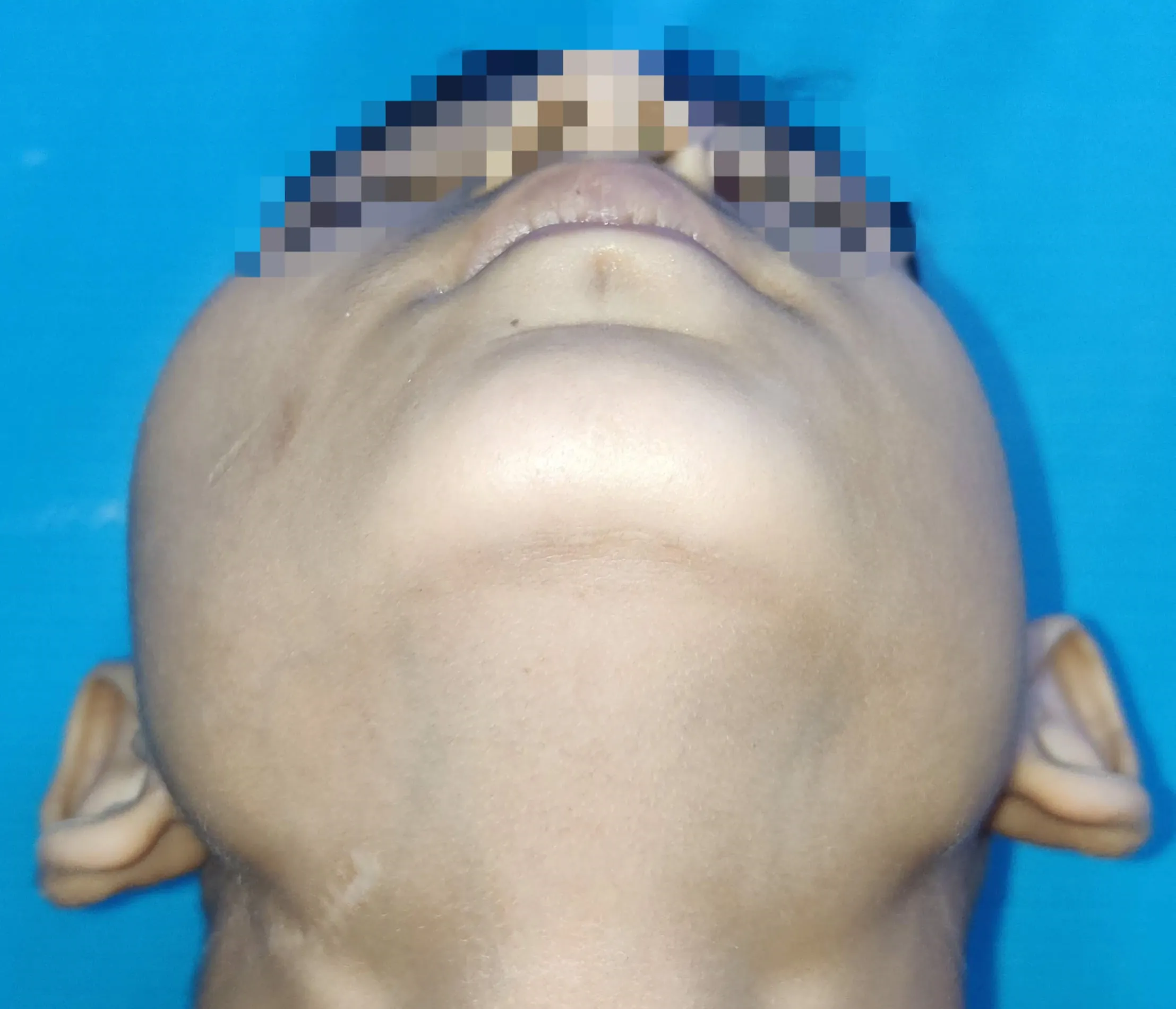
Hemangiomas are benign vascular tumors that commonly affect infants and children, primarily appearing on the face. The good news is that many hemangiomas naturally regress over time, with no threat to life expectancy. For parents, the main concern is often the cosmetic aspect. They are non-cancerous so there is nothing to worry about the life expectancy of the children.
About Kayakriti and Your Surgeon
A short walk-through of our Lucknow clinic, plus a brief introduction from Dr. Amit Agarwal.
Hemangiomas are benign vascular tumors that commonly affect infants and children, primarily appearing on the face. The good news is that many hemangiomas naturally regress over time, with no threat to life expectancy. For parents, the main concern is often the cosmetic aspect. They are non-cancerous so there is nothing to worry about the life expectancy of the children.
How Common Are Hemangiomas?
Hemangiomas are the most prevalent benign tumors in infants, with an incidence of 4% to 10% by the age of 1 year. Low birth weight and premature infants have a higher risk, up to 23%. These tumors typically don’t pose health issues but may rarely bleed or become painful.
Locations on the Body
Approximately 60% of hemangiomas occur on the head and neck, 25% on the trunk, and 15% on the extremities. Most hemangiomas present as a single tumor.
Classifying Hemangiomas
Infantile Hemangiomas- More common, present in 70% of cases, develop after 2 to 8 weeks of birth, grow rapidly for 6 to 12 months, and slowly involute/ disappear eventually up to 10 years of age
Congenital Hemangioma – Less common, present in 30% of cases, present at the time of birth, grows proportionately with the child’s growth, is either rapidly self-resolving or self-shrinking (within 12 to 18 months), or does not resolve at all.
Diagnosing Hemangiomas in Children
Diagnosis is usually made after a detailed history by the parents and physical examination of the child. Sometimes an Ultrasound, CT scan or MRI scan is done to see its extent and nature.
Is Treatment Necessary for Hemangiomas?
These tumors usually develop within the first few weeks of life but these usually resolve spontaneously by the age of 10 years. Depending on their size and location, they may be disfigured too.
Proper diagnosis by a trained plastic surgeon is a must.
Differentiation between other vascular tumors like Low flow vascular malformation and high-flow vascular malformation is a must before deciding on any treatment.
Key Points To Remember
The size of the hemangioma and the sex of the child do not affect the speed and completeness of the resolution of the hemangioma.
The location of hemangioma on the body has minimal effect on the final result after resolution.
If a child has multiple hemangiomas, they usually do not necessarily resolve at the same time and with the same speed.
The presence of ulceration has no prognostic significance except for scar appearance.
Treatment Options for Childhood Hemangiomas
A single, small hemangioma usually requires no treatment. It’ll likely go away on its own. Total involution occurs in 50% of hemangiomas by 5 years, in 70% by 7 years, and in 90% by 9 years.
However, some children may require treatment, such as skin hemangiomas that develop ulcerations or bleeding or are in specific areas on the face such as the lip, near the eyes. They can be treated with medications, laser, or surgery. Surgery is preferably avoided in babies and is done only if absolutely necessary.
Treatment Options for Hemangiomas at Kayakriti
1. Medicines
a) Propranolol- is the first line of drug. It is used for its effect on the ACE enzyme expressed on immature capillaries of growing hemangioma. It induces apoptosis (self-eating of cells) and the development of fat in the hemangioma.
b) Steroids- arrest growth of hemangioma but will not cause regression.
c) Sclerotherapy- injection of the sclerosing agent into the Hemangioma will regress the growth and arrest further development.
2. Pulsed dye and Nd: YAG lasers can be used in the treatment of superficial hemangiomas, and a few ulcerated hemangiomas and for removing residual color from regressed hemangiomas. However, it is not a common modality of treatment.
3. Surgery: Hemangiomas within the body may require surgery only if they grow too large cause problems in vision or feeding or if it is bleeding. Surgery is typically delayed until the child is of school age and beginning to experience psychological consequences.
When Is Surgery Necessary?
1. Surgery is preferably avoided in children with hemangiomas as they can cause more severe deformities or scars after surgery.
2. Surgery is usually reserved for hemangiomas in children or babies if the medical treatment has failed and the tumor threatens important structures or functions like-
a) Visual obstruction
b) Ulceration/ bleeding
c) Airway obstruction
d) Ear canal obstruction
3. Surgery is more commonly done for regressed hemangiomas during adolescent and teenage years after the tumor has resolved and left a residual scar or deformity over the region.
Surgery For Regressed Hemangioma
Surgery of choice is the Excision of residual tumor or scar left by the hemangioma. The skin coverage is by multiple scar revisions or skin grafting with or without flap cover. For bigger scars, tissue expansion can be done.
The post-operative recovery is rapid and would require 3-4 days of hospitalization.
See the difference
Before & After — Haemanagiomas
Drag the handle to compare. All photos are real patients shared with consent.
Before
After
Before
After
Before
After
Before
After
Images shown are intended to provide general treatment insight only.
Every patient is unique, and outcomes may vary depending on individual
condition and treatment plan.
Common questions
Frequently asked questions
What are Hemangiomas, and how do they manifest in children?
Hemangiomas are common vascular birthmarks characterized by a collection of blood vessels. In children, they typically appear as a raised, red or purplish lump on the skin.
What are the common causes of Hemangiomas in children, and how do they develop?
The exact cause of Hemangiomas is not fully understood, but they are believed to result from abnormal growth of blood vessels. They often appear in the first few weeks of life.
What are the different types of Hemangiomas in children, and how do they vary in appearance and characteristics?
Hemangiomas can be superficial (on the skin’s surface) or deep (within the tissues). They can also be classified as strawberry hemangiomas, which are red and raised, or cavernous hemangiomas, which are bluish and deeper in tissue.
How do Hemangiomas affect children, and do they require treatment?
Hemangiomas are typically benign and pose no immediate health threat. However, they can grow rapidly and may interfere with a child’s function or appearance, which may necessitate treatment.
How are Hemangiomas in children diagnosed, and what methods are used to assess their type, size, and potential impact on the child's well-being?
Diagnosis is typically based on a clinical examination by a healthcare professional. Imaging studies like ultrasound or MRI may be used to assess the Hemangioma’s characteristics.
What treatment options are available for children with Hemangiomas, and under what circumstances is treatment recommended?
Treatment options may include medication, laser therapy, or surgical removal, depending on the Hemangioma’s type, size, and location. Treatment is considered if the Hemangioma poses risks or functional issues.
Real stories
What our patients say about Kayakriti
★★★★★
"Kayakriti Plastic Surgery & Dental Clinic is one of the best clinics — excellent doctors and a very professional team. The clinic is clean, well-maintained, and uses advanced technology. Doctors explain everything clearly and make you feel comfortable throughout the treatment. Highly recommended for both plastic surgery and dental care."
★★★★★
"My big brother had a critical accident in August 2025 — his right foot was injured badly. Thanks to Dr Amit, the plastic surgery was a great success and now he is walking on his feet. Dr Amit is polite, humble, and guided us like family."
★★★★★
"Dr Amit Agarwal is really a very good plastic surgeon — he operated on my leg. The treatment is really very good and the staff behaviour is very nice."
★★★★★
"Dr Amit Agarwal performed surgery for diabetic foot on my father. We were very troubled before going to him; after his treatment the condition is much better. He debrided all the infection and did grafting on the same."
★★★★★
"Dr Amit Agarwal operated on my patient for a congenital defect. A renowned plastic surgeon of Uttar Pradesh with excellent post-operative results. He explains every step of the treatment very nicely and is very determined towards his work."
★★★★★
"Dr Amit is very approachable, so it is easy to talk to him and ask all our queries. Before operating he explains the entire process with all the pros and cons. His staff is well-trained and well-behaved — I had a wonderful experience."
★★★★★
"Dr Amit Agarwal operated on my sister who got burnt two years back, leaving burn scars in her neck area. With the help of tissue expanders he has cured her scars to the utmost. Thank you sir for the treatment."
★★★★★
"Dr Amit Agarwal operated on my child for a congenital defect and has delivered brilliant results. We are completely satisfied with his treatment and recommend him to everyone."
★★★★★
"I consulted Dr Amit Agarwal for my son's gynaecomastia operation. His results have been very good — now my son is much more confident and comfortable with his looks after the operation."
★★★★★
"Dr Amit operated on my patient for a lip augmentation surgery to give her lips a proper cosmetic shape. The post-operative results are very good — she is very satisfied."
★★★★★
"Dr Amit Agarwal operated on my son for gynaecomastia. Due to the puffiness in his chest he felt very embarrassed in public. Thanks to Dr Amit's treatment my son feels much better aesthetically and has gained a lot of confidence about his looks."
★★★★★
"We consulted Dr Amit for cosmetic correction of my daughter's facial profile. He brought her upper jaw forward, surgically improving her appearance. It was a tough operation but the results are phenomenal — we are really satisfied with the look now."
★★★★★
"My son had his fingers joined since birth, causing a lot of functional problems. Dr Amit Agarwal performed syndactyly release on him. Now he is much better and there were no issues regarding post-operative complications."
★★★★★
"I got my rhinoplasty done under Dr Amit. The shape of my nose wasn't nice and my facial profile was getting hampered. Dr Amit elevated my nose to give it proper shape — now it is looking fine and I am very satisfied."
★★★★★
"Dr Amit Agarwal operated on my patient for deformed lips. He gave my patient a very aesthetic appearance and we are highly satisfied by the surgery. The cosmetic correction was successful with no complications."
★★★★★
"Dr Amit Sir is really a very good plastic surgeon — great nature, very cooperative staff, excellent scope for cosmetic treatment. Very happy and satisfied with the treatment. It really changed my life and enhanced my confidence."
★★★★★
"Dr Amit Agarwal performed cosmetic surgery on my nephew, who was facing a lot of issues with confidence due to gynaecomastia. After Dr Amit's treatment he is much better and has a boosted confidence level."
★★★★★
"I met a road accident two months back and my ring finger fractured. My orthopaedic doctor recommended Dr Amit for the joint fracture management. After he operated, my condition is much better."
★★★★★
"Dr Amit Agarwal operated on my patient for vascular malformation. He removed the complete swelling through an operation which went well and the results are good. The staff kept us well informed at every step and the whole process went smoothly."
★★★★★
"My patient wasn't satisfied with the aesthetic appearance of her lips. Dr Amit performed a lip augmentation surgery — it made her lips look more full and richer. She is very satisfied with the results."
★★★★★
"We were very troubled after my son met a road accident in which his jaw got fractured. Dr Amit confirmed the diagnosis quickly and proceeded for the surgery — through plating he joined the bones of the jaw and stabilised it. The condition now is much better."
★★★★★
"My brother is diabetic and hurt his leg; the wound was not healing for a long time. Dr Amit debrided all the infected part and covered it with a flap. The wound is now healed — we are lucky we got the correct treatment on time."