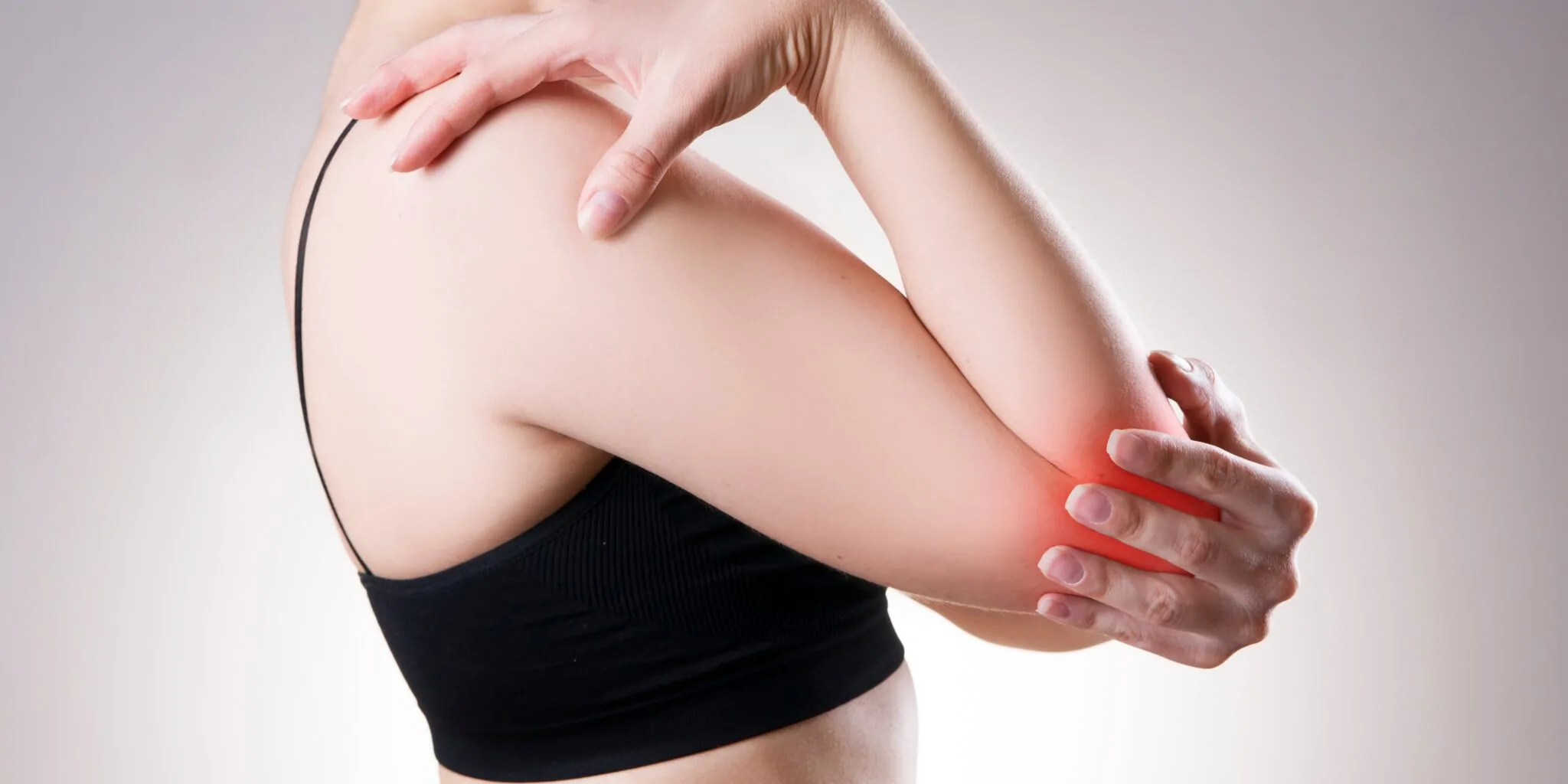
If you are on this page reading this, it means you have a chronic painful condition of the outer aspect of the elbow of your dominant working hand which has been earlier diagnosed by many physicians as Tennis Elbow and you have taken multiple treatments and therapies for the same but have no relief.
About Kayakriti and Your Surgeon
A short walk-through of our Lucknow clinic, plus a brief introduction from Dr. Amit Agarwal.
Why Is It Crucial To Grasp Resistant Tennis Elbow, Especially If You Have Persistent Elbow Discomfort?
If you are on this page reading this, it means you have a chronic painful condition of the outer aspect of the elbow of your dominant working hand which has been earlier diagnosed by many physicians as Tennis Elbow and you have taken multiple treatments and therapies for the same but have no relief.
Differentiating Resistant Tennis Elbow from Radial Tunnel Syndrome: Unveiling the Confusion
There might be a possibility that you are suffering from tennis elbow and are in the recovery phase which is quite long and can last up to one year during treatment for tennis elbow.
There is one more entity known as radial tunnel syndrome which is often confused with tennis elbow. The patients may have chronic pain in the elbow region and at the back of the upper part of the forearm.
Unraveling Radial Tunnel Syndrome: Its Causes, Symptoms, and More
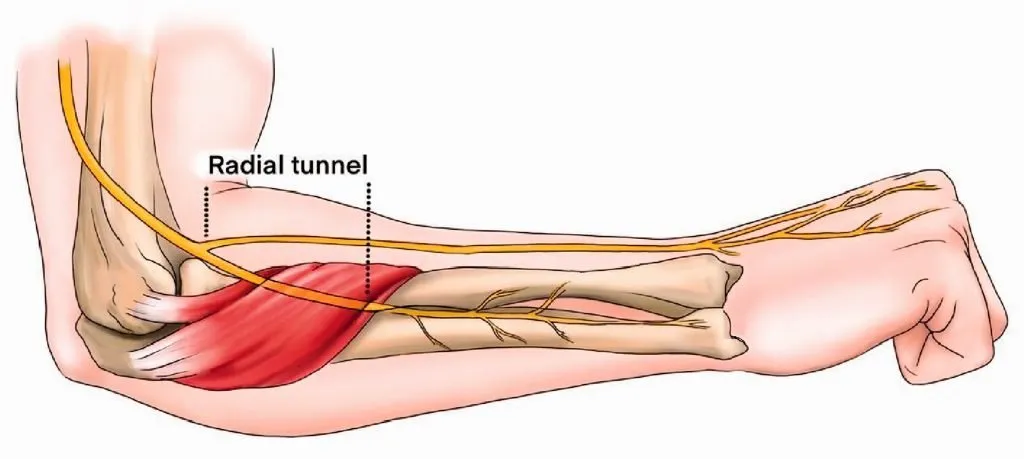
The radial nerve is one of three nerves in your forearm, traveling from the side of your neck, down the back of your arm, through your forearm, and into your hand.
Your radial nerve is responsible for a lot of different arm movements, including forearm rotation, elbow straightening, and wrist and finger movements.
Where is the radial tunnel located?
When the radial nerve reaches the elbow, it passes through the radial tunnel, which is a very narrow space surrounded by a lot of muscles. The nerve when compressed here often causes nagging pain in the upper part of the back of the forearm.
What is radial tunnel syndrome?
Radial tunnel syndrome occurs when a nerve called the radial nerve is compressed as it enters the radial tunnel in the forearm.
It also gives rise to pain around the same region which is affected by tennis elbow but has a completely different etiology and management. That is why radial tunnel syndrome is often called a resistant tennis elbow.
Who is at risk of developing radial tunnel syndrome?
Radial tunnel syndrome is most common in women between the ages of 30 and 50 years.
Men and women with poor forearm and wrist strength and flexibility.
Sportsmen who fail to warm up adequately before playing sports.
Diabetes and Hypothyroidism.
Tumors or ganglion cysts (mass or lump) in the arm.
Causes of Radial Nerve Compression
When the radial nerve passes through the radial tunnel which is surrounded by muscles covered with fascia (tissue fibers that enclose, separate, or bind together muscles and other soft structures), it becomes vulnerable to compression and irritation by the surrounding structures.
If any of the structures become inflamed, it puts too much pressure on the nerve, leading to this condition. But several different activities can cause radial tunnel syndrome, including:
Repeating certain motions (often at work) over and over again. Typing or using a screwdriver are good examples of these types of motions.
Constant push-and-pull activities like professional football or baseball players.
A direct Injury to the outside of the elbow or forearm.
Excessively gripping or bending wrist which places extreme tension in the muscles surrounding the radial tunnel.
Symptoms of Radial Tunnel Syndrome
1. Profound nagging pain in the area on the outside of the elbow, stretching down to the forearm which causes fatigue in the muscles while doing daily work. Pain may also get worse while sleeping. Certain activities can make these symptoms worse, including:
Activities that require extensive use of your forearm and/or wrist.
Twisting and turning motions of the wrist.
Lifting heavy objects.
Extending your elbow too much.
2. Over time, radial tunnel syndrome can weaken the muscles of the forearm and decrease wrist strength, making it increasingly difficult to grip or lift certain things.
3. If unrelieved, it can cause wrist or finger, thumb drop, meaning you lose the ability to lift your hand or fingers and thumb from a drop position.
Diagnosis of Radial Tunnel Syndrome
Radial tunnel syndrome is very frequently misdiagnosed as tennis elbow because of the same site of location of pain which also increases with twisting and turning movements of the wrist.
A careful history and proper physical examination can help in arriving at a diagnosis of radial tunnel syndrome.
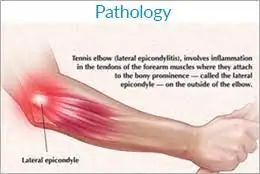
1. The maximum pain in tennis elbow is at the region of the lateral epicondyle bone of the elbow region whereas in radial tunnel syndrome, it is 2 to 3 centimeters distal to the bone.
2. The area can be examined for pain by applying light pressure and doing a few provocative tests which can help in the diagnosis-
a) Pain while turning the palm up from a palm-down position against resistance or
b) Pain while extension of the fingers against resistance is diagnostic of radial tunnel syndrome.
There are no formal imaging tests that can diagnose radial tunnel syndrome, though an X-ray, MRI, or electromyography test, is done just to rule out other potential injuries or conditions.
Treatment Of Radial Tunnel Syndrome
The goal of treatment is to eliminate pain and prevent it from ever coming back. Proven nonsurgical techniques exist which can benefit the condition of radial tunnel syndrome.
Stop or reduce the activity or movements that cause pain.
If your job is causing your symptoms, you may need to change your place of work or talk about getting more breaks during the workday.
Try to avoid any heavy push-and-pull movements if possible.
For athletes, practice strength and flexibility exercises and always remember to adequately warm up before playing or practicing.
Rest and medical treatment with anti-inflammatory medications is generally successful in relieving symptoms in three to six weeks for most patients.
Steroid injections to relieve inflammation and pressure on the radial nerve, if necessary.
Wearing a wrist and/or elbow splint to reduce movement and irritation.
Physical therapy exercises to help stretch out and loosen the tight muscle/tissue around the radial nerve ( wrist extension stretch, wrist flexion stretch, wrist supination, and radial nerve glide exercises).
Surgery For Radial Tunnel Syndrome
If symptoms don’t improve after nonsurgical treatment, then surgery is indicated which is done under brachial block or general anesthesia.
The goal of surgical decompression is to take the unwanted pressure off the radial nerve as it passes through the radial tunnel.
An incision is given right below the outside of the elbow and into the forearm. The area compressing the nerve is released, expanding the tunnel in the process.
Recovery After Surgery
After your surgery, you will be given an elbow splint that will immobilize your arm.
Sutures are removed after 14 days.
Around this time, you can also begin certain activities that will improve your range of motion, including: A gentle exercise program. Soft-tissue massages. Stretching.
Strength-building exercises for your forearm and hand, like squeezing a rubber ball, under a therapist’s supervision can be started 6 weeks after the surgery.
During this recovery phase, you need to avoid lifting and other activities that require you to bend your arm at the elbow.
In the final stage, exercises to stabilize and strengthen your wrist, elbow, and shoulder will be added.
Recovery from this surgery takes about four to six months, but it can sometimes take even longer.
Late-Stage Radial Nerve Compression: Symptoms and Management
If the patient has presented very late, then it can lead to radial nerve palsy with atrophy of the muscles of the back of the forearm. He or she would have permanent wrist, finger, and thumb drops.
Such condition of wrist drop and finger, thumb drop (inability to extend the wrist, thumb, and fingers) is also usually seen in long-standing compression of the radial nerves due to tumors or injuries of the radial nerve after accidents or fractures.
How are late cases of radial nerve compression managed?
Release of the compression along with the tendon transfers should be done to strengthen the weak portions of the hand.
A strong tendon of the hand is re-routed to substitute a weaker or lost movement of the hand.
How is tendon transfer done for radial nerve compression?
During tendon transfers for radial nerve palsy , 3 tendons from the front of the forearm and hand are taken, re-routed, and sutured to the tendons of the back of the forearm and hand so that the patient can extend his wrist, fingers, and thumb.
The surgery is usually done under brachial block or general anesthesia and a splint or slab is given for immobilization in the post-operative period.
The patient is usually discharged on the second day after the surgery.
Sutures are removed 14 days after surgery.
Splint is removed 3 to 4 weeks after the surgery and gradual training of the transferred muscles or tendons is started so that they regain their newly assigned function.
Visual reference
Understanding Resistant Tennis Elbow
A visual reference to the anatomy and approach used at Kayakriti — illustrating the affected tendons and the corrective procedure plan.
Images shown are intended to provide general procedure insight only.
Actual scans vary by patient and clinical situation.
Common questions
Frequently asked questions
What is Resistant Tennis Elbow?
Resistant Tennis Elbow is a condition characterized by persistent pain on the outer aspect of the dominant working hand’s elbow. It often occurs after multiple treatments for the traditional Tennis Elbow have failed.
What is Radial Tunnel Syndrome?
Radial Tunnel Syndrome is a condition where the radial nerve gets compressed as it enters the radial tunnel in the forearm. This can cause chronic pain in the elbow region and upper part of the forearm.
Who is at risk for Radial Tunnel Syndrome?
Radial Tunnel Syndrome is more common in women aged 30 to 50, individuals with poor forearm and wrist strength, athletes with inadequate warm-up routines, and those with conditions like diabetes or tumors in the arm.
What are the symptoms of Radial Tunnel Syndrome?
Symptoms include nagging pain on the outside of the elbow, stretching down to the forearm, which worsens during certain activities. In advanced cases, it can lead to muscle weakness and loss of hand function.
How is Radial Tunnel Syndrome diagnosed?
Diagnosis involves a careful history and physical examination, with pain being localized about 2-3 centimeters distal to the lateral epicondyle. Diagnostic tests, such as X-rays and EMG, are used to rule out other conditions.
What are the non-surgical treatments for Radial Tunnel Syndrome?
Non-surgical treatments include modifying activities that cause pain, rest, anti-inflammatory medications, wrist and elbow splints, physical therapy exercises, and steroid injections.
When is surgery recommended for Radial Tunnel Syndrome?
Surgery is considered when non-surgical treatments fail. It involves decompressing the radial nerve, and recovery typically takes several months.
How do late cases of Radial Nerve Compression manifest?
Late-stage radial nerve compression can result in radial nerve palsy, characterized by muscle atrophy in the back of the forearm and permanent wrist, finger, and thumb drop.
How is late-stage Radial Nerve Compression managed?
Late cases involve releasing the compression and performing tendon transfers to strengthen the affected hand.
How is tendon transfer done for Radial Nerve Compression?
During tendon transfers, tendons from the front of the forearm and hand are re-routed to restore wrist, finger, and thumb extension. Surgery is followed by immobilization and rehabilitation.
Real stories
What our patients say about Kayakriti
★★★★★
"Kayakriti Plastic Surgery & Dental Clinic is one of the best clinics — excellent doctors and a very professional team. The clinic is clean, well-maintained, and uses advanced technology. Doctors explain everything clearly and make you feel comfortable throughout the treatment. Highly recommended for both plastic surgery and dental care."
★★★★★
"My big brother had a critical accident in August 2025 — his right foot was injured badly. Thanks to Dr Amit, the plastic surgery was a great success and now he is walking on his feet. Dr Amit is polite, humble, and guided us like family."
★★★★★
"Dr Amit Agarwal is really a very good plastic surgeon — he operated on my leg. The treatment is really very good and the staff behaviour is very nice."
★★★★★
"Dr Amit Agarwal performed surgery for diabetic foot on my father. We were very troubled before going to him; after his treatment the condition is much better. He debrided all the infection and did grafting on the same."
★★★★★
"Dr Amit Agarwal operated on my patient for a congenital defect. A renowned plastic surgeon of Uttar Pradesh with excellent post-operative results. He explains every step of the treatment very nicely and is very determined towards his work."
★★★★★
"Dr Amit is very approachable, so it is easy to talk to him and ask all our queries. Before operating he explains the entire process with all the pros and cons. His staff is well-trained and well-behaved — I had a wonderful experience."
★★★★★
"Dr Amit Agarwal operated on my sister who got burnt two years back, leaving burn scars in her neck area. With the help of tissue expanders he has cured her scars to the utmost. Thank you sir for the treatment."
★★★★★
"Dr Amit Agarwal operated on my child for a congenital defect and has delivered brilliant results. We are completely satisfied with his treatment and recommend him to everyone."
★★★★★
"I consulted Dr Amit Agarwal for my son's gynaecomastia operation. His results have been very good — now my son is much more confident and comfortable with his looks after the operation."
★★★★★
"Dr Amit operated on my patient for a lip augmentation surgery to give her lips a proper cosmetic shape. The post-operative results are very good — she is very satisfied."
★★★★★
"Dr Amit Agarwal operated on my son for gynaecomastia. Due to the puffiness in his chest he felt very embarrassed in public. Thanks to Dr Amit's treatment my son feels much better aesthetically and has gained a lot of confidence about his looks."
★★★★★
"We consulted Dr Amit for cosmetic correction of my daughter's facial profile. He brought her upper jaw forward, surgically improving her appearance. It was a tough operation but the results are phenomenal — we are really satisfied with the look now."
★★★★★
"My son had his fingers joined since birth, causing a lot of functional problems. Dr Amit Agarwal performed syndactyly release on him. Now he is much better and there were no issues regarding post-operative complications."
★★★★★
"I got my rhinoplasty done under Dr Amit. The shape of my nose wasn't nice and my facial profile was getting hampered. Dr Amit elevated my nose to give it proper shape — now it is looking fine and I am very satisfied."
★★★★★
"Dr Amit Agarwal operated on my patient for deformed lips. He gave my patient a very aesthetic appearance and we are highly satisfied by the surgery. The cosmetic correction was successful with no complications."
★★★★★
"Dr Amit Sir is really a very good plastic surgeon — great nature, very cooperative staff, excellent scope for cosmetic treatment. Very happy and satisfied with the treatment. It really changed my life and enhanced my confidence."
★★★★★
"Dr Amit Agarwal performed cosmetic surgery on my nephew, who was facing a lot of issues with confidence due to gynaecomastia. After Dr Amit's treatment he is much better and has a boosted confidence level."
★★★★★
"I met a road accident two months back and my ring finger fractured. My orthopaedic doctor recommended Dr Amit for the joint fracture management. After he operated, my condition is much better."
★★★★★
"Dr Amit Agarwal operated on my patient for vascular malformation. He removed the complete swelling through an operation which went well and the results are good. The staff kept us well informed at every step and the whole process went smoothly."
★★★★★
"My patient wasn't satisfied with the aesthetic appearance of her lips. Dr Amit performed a lip augmentation surgery — it made her lips look more full and richer. She is very satisfied with the results."
★★★★★
"We were very troubled after my son met a road accident in which his jaw got fractured. Dr Amit confirmed the diagnosis quickly and proceeded for the surgery — through plating he joined the bones of the jaw and stabilised it. The condition now is much better."
★★★★★
"My brother is diabetic and hurt his leg; the wound was not healing for a long time. Dr Amit debrided all the infected part and covered it with a flap. The wound is now healed — we are lucky we got the correct treatment on time."