Introduction
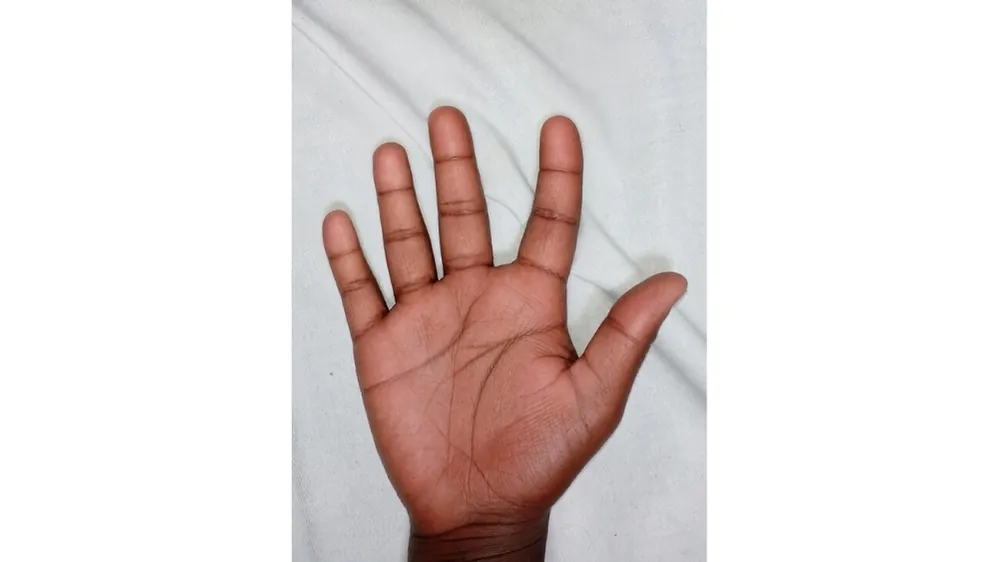
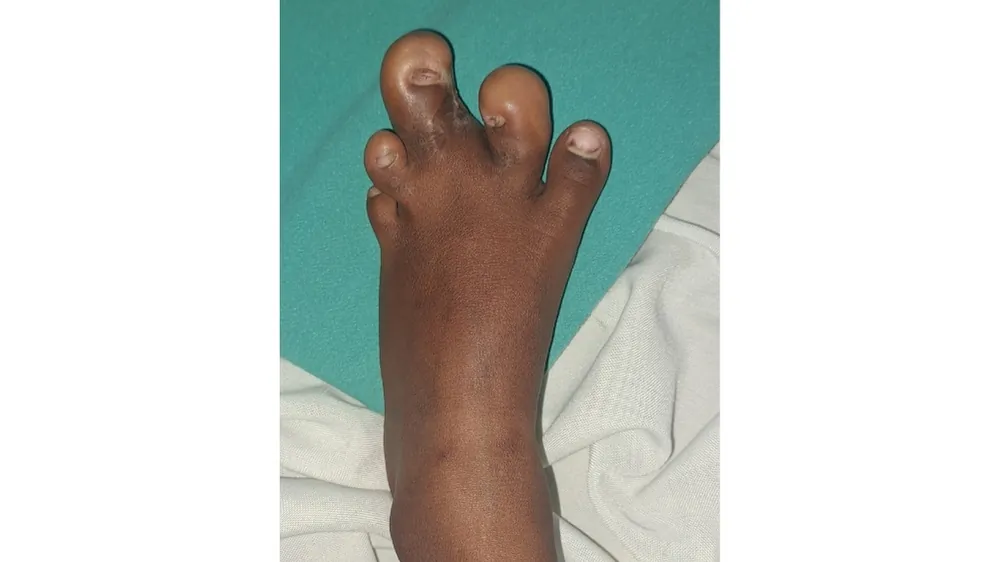
Macrodactyly is the overgrowth of a finger or toe, often resulting it to be abnormally large. It is seen in children and adolescents. This disproportionate overgrowth of the bony and fibrofatty tissue of a finger or toe of the child is usually present since birth.
What is the incidence of Macrodactyly?
It is a rare abnormality presenting in 1 out of 1,00,000 live births.
What causes Macrodactyly?
The exact cause is not known. It is definitely not hereditary means it does not run in families. It is related to lipofibromatosis (overdevelopment of the tissues) of the nerve of the finger , vascular malformations , or bony overgrowth.
What are different types of macrodactyly?
Macrodactyly can manifest in 2 main forms, including:
- Static (enlargement at birth with proportional growth as the child grows)- the rate of growth of the finger or toe is roughly the same as the growth of other fingers or toes.
- Progressive (disproportionate growth as the child grows)- the rate of growth of the finger is much more than the growth of the rest of the hand or foot.
It is often associated with syndactyly (joined fingers) in a child.
How is macrodactyly diagnosed?
The presentation of macrodactyly varies with each patient.
A. If the child has static macrodactyly, the affected fingers or toes will be about one and a half times the length and width of the normal adjoining fingers.
B. If the child has progressive macrodactyly, then the involved digits may be huge. This can lead to severe deformities of the foot or hand and can lead to functional impairment also making the child not able to use the hand or foot well.
The following features are seen in the hand or the foot-
- The hand/foot may show overgrowth with excessive formation of fat.
- Affected digits may be stiff and curved.
- The fingers often deviate away from each other.
- Overgrowth in the palm and forearm or sole area of the foot is often seen.
- Excessive fatty tissue is commonly seen along the median nerve in the hand.
Serial X-rays demonstrate the extent of deformity
MRI is sometimes done to demonstrate other abnormalities present in the overgrown finger or toe.
How is macrodactyly treated?
- The best treatment of Macrodactyly is with surgery but the Timing of surgery is patient-specific.
- Macrodactyly is a difficult problem to treat and would require multiple surgeries so that the overgrown finger or toe looks quite normal and natural as other fingers and toes.
How is the surgery done for Macrodactyly for a child at Kayakriti?
The main goal of the surgery is to maximize the function of the finger and a better cosmetic match with the other fingers or toes.
In mild cases, only careful observation is advised with regular follow-ups.
In severely deformed fingers or toes or with progressive macrodactyly, surgery is advised which will be done in stages. The surgery cannot be done in a single stage in Macrodactyly as all the components (nerve, vessel, bone, skin, and fat) are larger in the digit.
- Epiphysiodesis of the bone – In the first stage, epiphysiodesis is done to arrest the growth of the digit along with the excision or debulking of the involved digital nerve.
- Debulking procedure for soft tissue : Debulking is usually done to decrease the width of the finger or toe. It is usually done in multiple stages and the interval should be at least 3 months between sessions. Excision of the involved digital nerve may slow down the overgrowth as believed (TSUGE).
- Shortening procedure for the bone- If the growth arrest is not satisfactory or if the digit is much overgrown, then corrective osteotomy (cutting of bone) of the middle bone (phalanx) and the distal bone (phalanx) with removal of bone and fixation with k-wire is done.
- Arthrodesis of the joints of the involved fingers or toes can also be attempted.
- Amputation of the finger or toe has been tried in overgrown digits with stiffness and limited function or those that interfere with the function of the other normal digits.
Recovery after surgery in Macrodactyly
- Hand or foot is Immobilized for 6 weeks
- Night-time splint for three months
- Full range of motion with hand/foot exercises